Is a plumbing problem at my business an urgent one?
For tenants and business owners (homeowners can begin at the Chaffey Pipe and Drain home page): call it urgent if water floods the space, a restroom or kitchen is out of action, stock is at risk, or gas is escaping. Split supply lines, sewage rising in floor drains, a tank heater emptying across a stockroom and any gas odor all fit. A dripping tap does not. The test is damage in progress or a legal reason you cannot open.
Businesses have a second clock that homeowners do not: the health inspector, the landlord and the insurer all care how fast you reacted. A restaurant without hot water or a usable sink may be unable to stay open under health rules, and an office without working restrooms may have to send people home. Jot the exact time you first saw trouble; all three will ask.
What should staff do before help shows up?
Find the water shutoff serving your suite and close it. Where wet floors meet panels, outlets or equipment, switch that zone off at the breaker while standing on something dry. Sewage coming back up means every fixture on that line goes out of service. Staff never touch gas piping; a smell means everyone leaves and the utility gets a call.
Every tenant should know three locations before trouble starts: the water shutoff, the electrical panel and the gas shutoff. In multi-tenant buildings, the main valve can hide in a landlord-held riser room or a shared utility closet. If you cannot find it, ring the property manager in parallel.
Gas deserves its own rule. Walk everyone outside. From the parking lot, the SoCalGas leak number is 1-800-427-2200; a strong odor or hissing pipe is 911 territory. Do not switch lights or lock the front door behind you, and let the fire department and the utility decide when re-entry is safe.
How do I decide between a landlord repair and my own plumber?
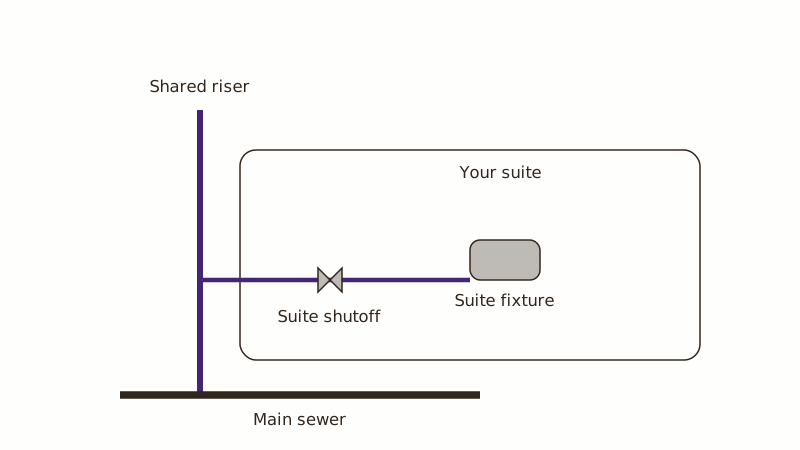
Your lease sets the answer. Typically the landlord owns the building's shared lines, risers and main sewer, and the tenant owns the fixtures and equipment inside the suite. A failed tenant water heater or a clogged tenant-side drain is yours. A main line stoppage that affects several units is usually the landlord's.
Read the repair clause first. Even when the fault is plainly yours, email the property manager so a record exists. If the landlord's response is slow and your business is losing money, many tenants arrange their own repair and document everything, but check the lease and talk to the landlord first, because unauthorized work can create disputes. Ask the property owner who holds the building's plumbing permits and keys, since some buildings route repairs through a preferred contractor.
Which problems hit Ontario businesses most often?
Grease and wipe clogs in kitchen lines, failed water heaters, backed-up floor drains, split supply lines at old fittings, and failing backflow assemblies cause most calls. Warehouses add long runs of roof drains and restroom clusters far from the main. Retail strips stack ten tenants on one sewer, so a blockage rarely stays contained.
The Ontario airport district is the clearest example. Meredith International Centre alone is a seven-building, three-million-square-foot development on a 257-acre specific plan, and the surrounding logistics buildings share the same pattern: large footprints, big roof areas, restroom blocks and mechanical rooms spread out. The page for the Ontario airport and Meredith area describes the district in more detail.
Older commercial buildings near downtown bring other headaches: tired cast-iron or clay drains, undersized sewer laterals and repairs patched over decades. Newer tilt-up buildings tend to have PVC under the slab and concerns about slab penetrations.
Does a commercial emergency need a permit?
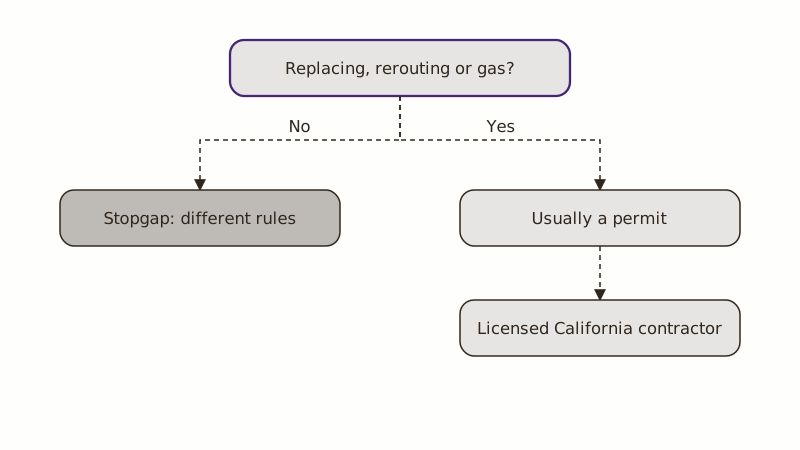
Often, yes. Replacing a water heater, rerouting piping, installing backflow equipment or touching gas lines tends to need a permit, and that puts the job with a contractor who holds a California license. Emergency stopgaps, like a temporary clamp, are treated differently from permanent repairs. Ask the contractor which category your job falls into.
In the City of Ontario, permits come from the Building office at City Hall, 303 East B Street, phone (909) 395-2023. Tenants should coordinate with the owner, because a landlord's insurer or lender may require permitted work. The city's Municipal Utilities Company handles public water and wastewater service, so a problem in the street rather than inside your walls is a call to it.
Backflow assemblies get their own mention. Plenty of commercial properties have one on the domestic line or the fire line, and the local water supplier sets how often it gets tested. If your emergency involves one, see commercial backflow testing.
What does an urgent commercial plumbing call cost?
Commercial work is usually priced by time and materials, sometimes with a flat diagnostic charge, and urgent calls may carry a surcharge. Larger fixes, such as sewer line replacement or boiler work, get a written scope. Ask the contractor to name the hourly rate, minimum charge, trip fee and any after-hours premium before they start.
We do not quote numbers here because a ten-minute clog and a collapsed lateral sit in different worlds. The article on commercial plumber hourly cost explains what drives the rate and what to ask. Whatever the range, your actual price arrives in the written quote the contractor hands over after seeing your property, with materials, hours, permit and cleanup broken out.
Keep every receipt. Insurance claims for water damage usually need an itemized bill, photos taken before cleanup, and a description of the cause. The after-hours plumbing page goes deeper on documenting a loss.
How do I reach a plumber for my business through this site?
Phone the number in the header or send the form, and say what kind of business you run, the address, what broke, and whether water keeps flowing. Our side arranges a local plumber who takes commercial work. Our phone lines cover weekdays, nine to five, so contain the damage yourself first.
A good request names the building type (restaurant, warehouse, office, retail), the suite, who has keys, and whether the landlord approved the call. Tell us if customers or staff are affected. Before work begins, run the contractor's name through the state board's search. The licensing line sits at a $1,000 job, labor plus materials, with permit jobs covered regardless of size.
You can also use the quote page for a scheduled repair that is not urgent but needs a written number first.
Common questions
Is anyone available after dark or on weekends?
Some contractors take after-hours work, though we cannot promise it. For a flood overnight, close the water, kill power to the wet zone, ring the utility about gas, and file a request so it is waiting when the lines open.
Who pays when a tenant pipe bursts?
It depends on the lease and on which pipe failed. Landlords commonly handle shared risers, mains and building systems, while tenants handle suite fixtures and equipment. Insurance may cover resulting damage, based on the wording of your policy. Put the landlord and the insurer on notice in writing straight away. Save photos and invoices.
Do restaurants need special plumbing help?
Often, yes. Kitchens add grease traps or interceptors, floor drains, dishwashers and hot water demand, and a stoppage can close you. Ask how often the contractor handles grease lines and who deals with the city if an interceptor needs attention. Health rules on sinks and hot water also limit how long you can stay open.
Is a sewer backup my problem or the city's?
Start by checking whether other tenants or neighbors are affected. A backup in one suite is typically an internal or lateral issue for a plumber. A backup that hits several buildings, or sewage surfacing in the street, is a matter for the City of Ontario Municipal Utilities Company, reachable at (909) 395-2600.
What paperwork should I keep after an emergency?
Keep the contractor's written quote and final invoice, the permit number if there was one, photos of the damage before cleanup, a log of times, and any messages with the landlord. Insurers and landlords commonly ask for these, and an organized folder shortens disputes later.