Chino plumbing has an unusual backstory. The ground under the city once held dairy herds, the water comes from two different suppliers depending on the street, and permit paperwork runs through the city's own Building Division. This page keeps to Chino itself. The areas page lists the neighboring cities. Know the problem already? Describe it here, and Chaffey Pipe and Drain (home) will arrange a visit.
Which water supplier sends my Chino bill, and does it change who I phone?
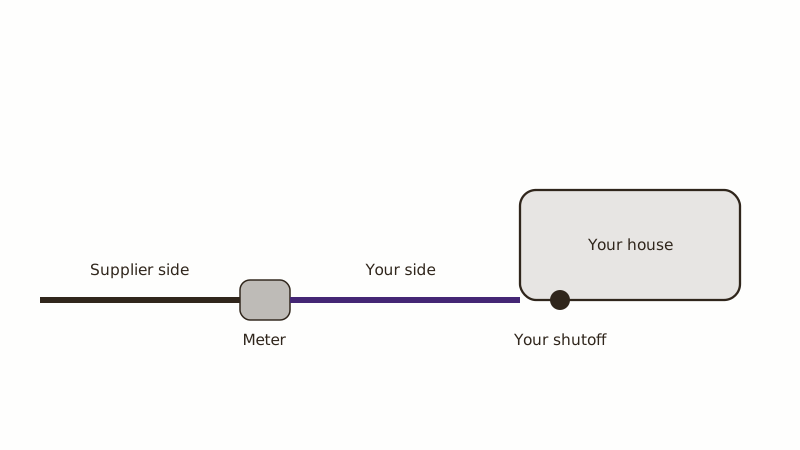
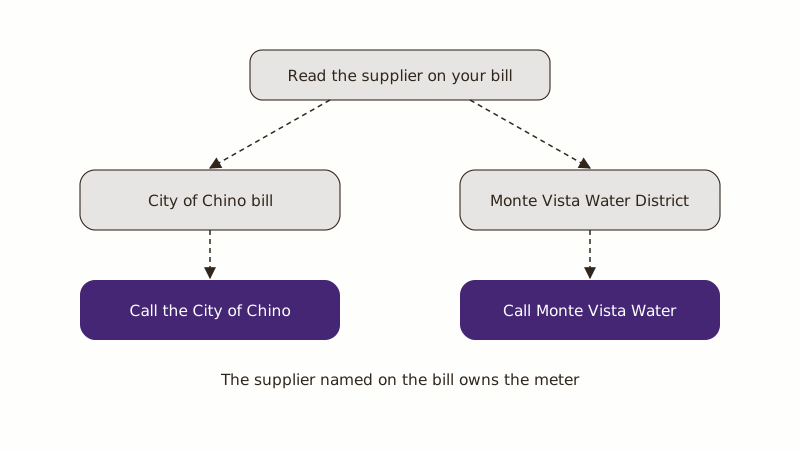
Many Chino addresses are billed by the City of Chino. A portion of the city is billed by Monte Vista Water District instead. Read the top of your bill first. The supplier named there owns the meter, answers pressure questions on the street side and publishes the yearly report on your water.
The City of Chino's 2024 water quality report puts its supply at about 80 percent treated groundwater and about 20 percent from the Agua de Lejos Water Treatment Plant. Groundwater comes from wells run by the city or the Chino Basin Desalter Authority. Treatment pairs granular activated carbon with ion exchange, aimed at calcium, magnesium, nitrate, sulfate, fluoride and perchlorate, and the report lists PFAS among its targets.
Monte Vista Water District describes its Chino service as covering portions of the city and some unincorporated San Bernardino County areas. If its name is on your bill, read its report instead.
Can I get a fixed plumbing price for Chino?
Not in advance. Chino has no flat rate, because cost swings with access, pipe material, fixture count and any permit, and a number offered sight unseen is a guess. Only the written quote, handed over once someone has seen the job, counts as a real number.
Published guide ranges, with their sources, sit on the general plumber pricing page and heater replacement pricing. A $708,000 median home value does not make a toilet repair cost more. Age does add time: seized shutoff valves, corroded unions and remodeled rooms that wrap around old pipe all slow the work.
What do Chino's houses look like behind the walls?
Chino counts roughly 27,300 housing units (ACS 2024 1-year estimate, margin of error 1,761), and the typical owner-occupied home is valued at $708,000. Postwar tract streets often hold copper or galvanized steel supply lines, and newer subdivisions typically run PEX for supply with PVC or ABS for drains. Only an inspection confirms which you have.
That distinction steers the repair-or-replace call. One pinhole in a copper line is a small repair, while galvanized steel closing up from corrosion is a bigger decision. Three guides help you weigh it: replacing galvanized pipe, PEX against copper and repipe timing.
Warehouses and light industry sit beside housing in parts of Chino. Those buildings often call for tested backflow assemblies, a separate job described in commercial backflow testing, and sometimes after-hours repairs, covered in urgent commercial plumbing.
How does a visit to a Chino address get set up?
The quote form is always open, and the phone line covers weekdays, 9am to 5pm. Say which part of Chino you are in, what the problem looks like and if water is still running. Someone local comes to the address, assesses the work, and the price lands on paper beforehand.
Have these ready: the street address, a snapshot of the drip or the heater's rating label, your latest water bill if pressure or the meter is the question, and paperwork from earlier permitted work. Water gushing? Close the main first, then open the burst pipe emergency guide. For after-hours trouble, the emergency page explains the options.
Who handles plumbing permits in Chino?
The Building Division, inside Development Services at 13220 Central Avenue, issues Chino's permits: 909-334-3251, ds-building@cityofchino.org. The $1,000 line matters. Under it, small repairs may not need a contractor license. At that figure, parts included, or on any permitted job, California requires one. Heater swaps and gas piping usually land on the permit side.
The Contractors State License Board also says contracts above $500 must be in writing, and California limits home improvement deposits. Verify a contractor at cslb.ca.gov first.
Gas plays by separate rules. SoCalGas is Chino's supplier. A gas odor means exit first. Leaks get reported at 1-800-427-2200, SoCalGas's number, from the street, and 911 is for when people are hurt or threatened. Leave gas pipe work to a contractor, and ask the Building Division what permit applies. Gas line plumbing explains what that kind of job involves.
What did the dairy era leave in Chino's groundwater?
Chino was California's biggest milk-producing town for a stretch. A Regional Water Quality Control Board study counted roughly 400,000 cows in the Chino Basin in 1989, and nitrate in the basin groundwater was already above drinking water limits. That legacy explains why the Chino Desalter Authority treats brackish water from wells in southern Chino today.
For an owner, the takeaway is modest. The 2024 city report lists nitrate and perchlorate treatment and prints the results in its tables, so the useful move is reading your own supplier's report, not trusting rumor. Warehouses have replaced a good deal of dairy land across Ontario and Chino, as a PBS SoCal feature describes, so newer buildings in those districts stand on ground that was farmed.
Hardness is what you notice at the sink. The 2024 report gives total hardness, as CaCO3, between 180 and 280 for the city's own wells and between 110 and 170 for the desalter wells. Those are source figures, not a measurement of your kitchen, since the mix changes street by street. A plumber sees the effect as crusted aerators, a rumbling heater or a sediment-filled tank. For options, open the pieces on scale prevention and softeners.
Common questions
How hard is Chino tap water?
Harder in some spots than others. The City of Chino's 2024 report gives total hardness, as CaCO3, of 180 to 280 in its own wells, with softer desalter and imported water in the mix. Your street gets its own blend, and Monte Vista Water District customers should read that district's report instead.
Will swapping my Chino water heater require a city permit?
Often, yes. California cities generally treat a heater replacement as permitted work, filed by whoever installs it, usually with Chino's Building Division at 909-334-3251. Before agreeing, ask if the price covers filing and the inspection, and ring the division to verify, since fees and steps can change.
My Chino water bill jumped. Where do I start?
Begin with the supplier printed on the bill, since the city and Monte Vista Water District each manage their own meters. Then hunt for a silent leak: turn off every tap, watch the meter and see whether it keeps moving. This walkthrough on bills that spike with no drip in sight covers the steps.
What if I smell gas in Chino?
Walk out without flipping any switches. Once you are out, phone the utility's emergency line at 1-800-427-2200 and wait there until they say the building is clear. Where someone's safety is at stake, dial 911 as well. A gas odor is a phone emergency, never a form submission.