Yes, but usually as one contributor, not the whole story. EPA ties a drip a second to around 3,000 gallons annually, which works out near eight gallons a day by our arithmetic. That is real water, though small next to a running toilet or a hidden pipe leak. If your bill jumped sharply, test the meter before you replace a washer. Sink faucets and disposals have a repair overview at faucets, sinks and disposals. Prefer a pro? A quote request lines up a visit.
What does one dripping tap add up to?
EPA's leak-week page counts a once-a-second drip as 3,000 gallons and change every year. Spread over 365 days, that is about eight gallons a day, our own arithmetic. That is a small share of a typical household's use, and the same page puts the average household leak at more than 9,300 gallons a year.
A faster drip, or a stream, wastes much more. A hot water faucet also costs you the energy used to heat that water, which does not show on the water bill but does on the gas or electric one. The point: a drip deserves a fix because it is cheap, not because it explains a doubled bill.
If not the faucet, what moves a water bill?
Outdoor watering is the biggest swing for most homes, and a failed sprinkler valve can run all night. After that: a seeping toilet, a cracked sprinkler line, a buried pipe leaking before it reaches the house, extra people living there, an estimated reading, or a new rate. Faucet drips come far down the list.
Start by comparing the billing periods. A summer bill is often higher than a winter one. If the daily use stayed flat and the charge rose, the cause is rates or fees. If use itself rose, look for a leak. The water utility can say which one applies. For a City of Ontario account, that is the Ontario Municipal Utilities Company, and parts of Montclair and Chino get water from Monte Vista Water District.
How do you test for a leak with the water meter?
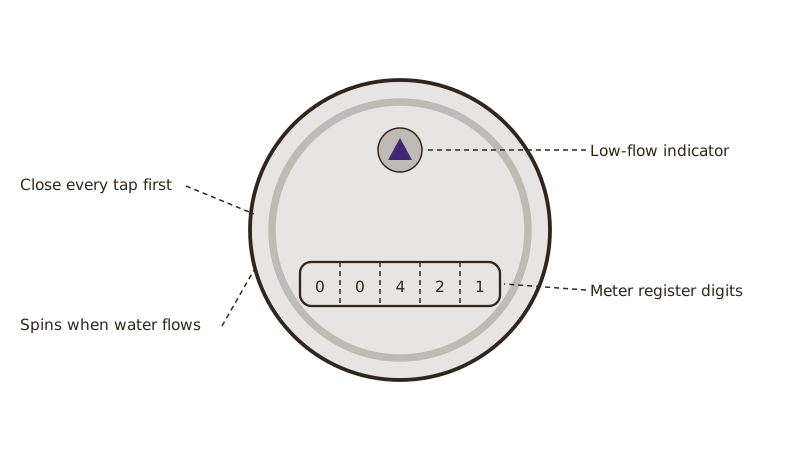
EPA gives a simple test. Photograph the meter dial, hold off on any water use for two hours, and photograph it again. Two different pictures mean a leak. Turn off the irrigation and ice maker, and confirm no one flushes or runs a tap during the test.
Many meters have a small low-flow indicator, often a triangle or dial that spins when any water moves. If it spins with every tap closed, water is escaping. After that, close the main valve where the pipe comes into the house and see whether the indicator still turns. Stopped? The leak lives inside the house plumbing. If it keeps spinning, the loss is upstream of the valve, in the buried pipe or at the meter.
How do you find out whether the toilet is the leak?
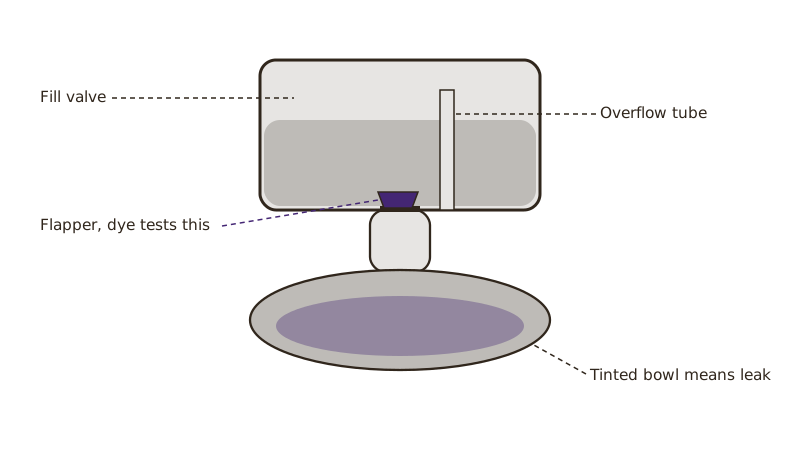
Use dye. EPA's version: add dye to the tank, then walk away for ten minutes without flushing. Tinted bowl water confirms the flapper leaks. Color means a leak past the flapper. Toilets are among the most common hidden sources, and they make no noise when they leak slowly.
If the toilet passes, check under sinks, behind the washing machine, at the water heater's relief valve drain and at hose bibs. A soft cabinet floor or a ceiling stain shows where water has been traveling. When the dye test fails, a toilet that keeps running explains the repair. Bills that stay high while everything looks dry are the subject of hidden causes of a big water bill.
Can you repair a dripping faucet on your own?
Close the little shutoffs beneath the sink, or the main if the sink has none, and open the faucet to empty the line. Plug the drain with a stopper so a small screw cannot vanish, then dismantle the handle. A tired washer, cartridge or O-ring causes most drips. Match the worn part at a hardware store, then reassemble the faucet and test it.
The method depends on the faucet type. A two-handle faucet usually has a rubber washer or seat. A single-handle faucet usually has a cartridge or ball. We have guides on fixing a leaky faucet, two-handle faucets and single-handle faucets. If the faucet body itself is corroded, replacement is the cleaner answer.
What about a leaking shower?
A dripping shower head or valve counts the same way as a faucet, and it is often ignored because the water goes straight down the drain. The scarier case is a leak inside the shower wall. It soaks framing and drywall, and the bill may be the first clue.
Signs: a dribble after shut-off, tile that gives under a finger, a discolored ceiling in the room below, a damp smell. A single-handle shower valve that drips usually needs a new cartridge, as in the leaky shower faucet guide. Hidden leaks behind the wall call for a plumber, since opening the wall to find the source is part of the job.
When is a high water bill worth a plumber visit?
Time for a plumber: the meter moves in the test, the indicator spins with every tap closed, a damp patch has no source, or the bill stays up after the drip is fixed. A plumber has the gear to pressure test lines and pinpoint leaks you cannot see.
Chaffey Pipe and Drain arranges local plumbers around Ontario and the neighboring communities, and a price on paper comes first. Other causes are covered in water bills that are too high. If you have found a leak, fix it and keep your meter readings for the next bill, because utilities sometimes review a high bill with a documented repair.
Common questions
Will one dripping faucet double my bill?
Almost never. Using EPA's drip figure, one faucet loses a modest amount compared with a whole house. A doubled bill points to irrigation, a toilet or a pipe leak. Fix the drip anyway, but test the meter to find the real cause.
Is my drip the only leak?
Repeat the meter test with every tap closed. If the reading is the same, the drip is the only loss. If it moved, something else is losing water, whether a toilet, a sprinkler line or a pipe. Dye in the toilet tank and a look under sinks narrow it down quickly.
Does a hot water drip cost more than a cold one?
Yes. Hot water carries the cost of heating on your gas or electric bill as well as the water on your water bill. The volume is the same, but you pay twice for it. A leaking hot faucet is a good first fix for that reason.
Is it smart to shut the water off before a trip?
For a long trip, closing the main shutoff is a sound habit, especially if you have a supply line you do not trust. It also stops a hidden leak from running for weeks. Leave the water heater setting alone, and check with the manual for vacation modes.
Can the utility help with a leak on my property?
Utilities can confirm meter readings and tell you whether a bill is estimated or measured. Leak repairs inside the property are the owner's responsibility. Some utilities review a high bill when a repair is documented, so keep receipts and readings, and ask your water utility what it offers.