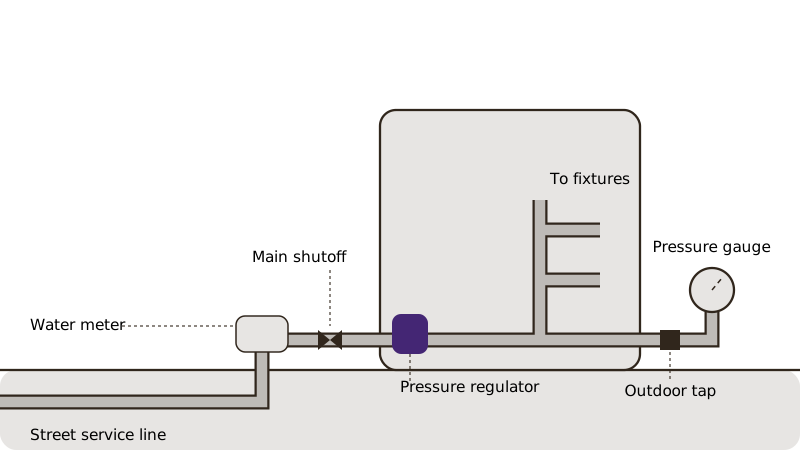
Yes. Usual culprits: crusted shower heads, an aging regulator, a half-shut valve, rusty or narrowed pipe, a concealed leak. Expect the plumber to begin by asking where it is weak. Describe the problem on the quote form. More of what we arrange appears on the home page.
Pressure trouble comes in two flavors, and they point in opposite directions. A weak flow at every tap means something near the main line. One sad shower head and normal pressure elsewhere means a clogged fixture, and that is a ten-minute fix you can try yourself.
Is low pressure the house, or just one fixture?
Turn on cold water in the kitchen, in a bathroom and outside. When all three trickle, suspect something upstream: the shutoff at the main, the regulator, the buried service pipe or the supplier. When just the shower sulks, examine its head and cartridge. Strong cold with weak hot implicates the water heater side.
That split saves money. Whole-house trouble belongs to a plumber. One-fixture trouble is often scale. Ontario's 2025 water quality report puts hardness between 91 and 177 ppm on average, depending on which source feeds an address, which is enough to crust small outlets over time. Twist off the aerator, give it an hour in white vinegar, then rinse it. The page on low shower pressure goes deeper, and low kitchen faucet pressure covers the sink.
What should I test before calling anyone?
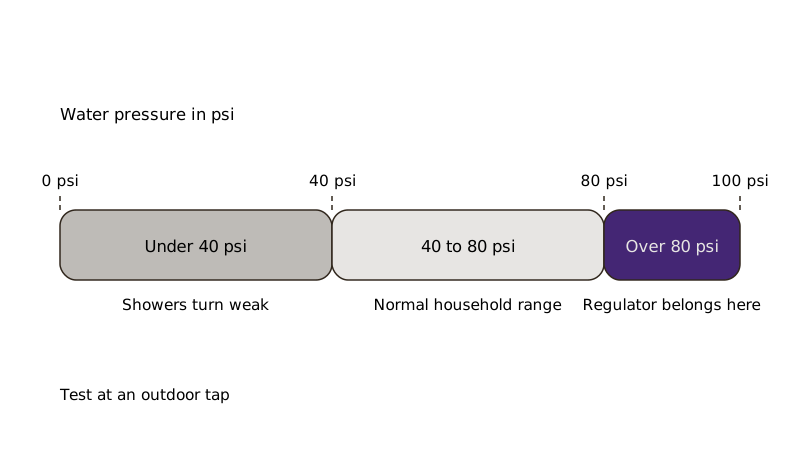
Check the main shutoff handle. A valve left a quarter closed after earlier work chokes everything beyond it. Clean each aerator and shower head, hunt for a weeping irrigation line, then screw a gauge onto an outside faucet. Typical household pressure sits somewhere from about 40 to 80 psi.
Those numbers matter in both directions. Under 40 psi, showers turn weak. Above 80 psi, the ceiling set by the state plumbing code, fixtures and joints suffer. Write the reading on a sticky note for the plumber. A healthy number with a trickling tap puts the fault in house piping or one valve. The long version lives in steps for low pressure around the house.
Why would pressure drop all at once?
When pressure collapses within hours, think valve, main-line leak, planned utility work, or a regulator that gave out. Ask a neighbor and ring the water supplier. If neighbors are fine and your hot and cold taps are both feeble, the main and the regulator come next.
Sudden is different from gradual. Gradual loss over months is scale or corrosion inside older pipe: galvanized lines near downtown Ontario and the Euclid Avenue historic area are the usual suspects, because they narrow as rust builds up. Sudden loss in a single afternoon is a mechanical event. Damp spots outdoors or a spinning meter suggest a leak, a route covered in what to check when pressure falls overnight and in finding the leak. After utility work, open one tap for a minute to push trapped air out.
Does a pressure regulator fix low pressure, or only high?
A regulator only lowers pressure that is too high. It cannot raise pressure above what the street supplies. When one fails, it can go either direction, which is why a failed regulator can produce weak flow or a violent surge. A gauge test decides: a reading far off the normal range points at the regulator.
Look for a squat brass dome beside the shutoff, right where the pipe comes in. That dome is the regulator. A few have a locknut and screw for tuning, and turning the adjustment screw walks through it. Swapping one is a plumber task whenever it requires cutting the main. Look at where the regulator is located if you cannot find yours, and replacing a worn regulator when it has failed.
Will a regulator stop water hammer?
Often it helps, though silence is not certain. Banging pipes come from a valve slamming shut against moving water, and high static pressure makes that worse. Bringing pressure down to the normal range can soften the noise. Persistent hammering after that usually calls for arrestors or pipe strapping, which is a separate job.
Treat the regulator as one possible cause. Loose pipe in a wall, a toilet fill valve closing hard and a dishwasher solenoid all produce the same thump. A plumber listens, turns fixtures on and off one at a time, and tests static pressure to work out which one. High pressure also wears relief valves and toilet fill valves, so the gauge reading comes first.
Do regulators wear out, and must a house have one?
No fixed lifespan exists. Water chemistry, pressure swings and age wear them down, and plenty outlast a decade. Where street pressure runs over 80 psi, the plumbing code expects reducing equipment; at lower street pressure a house may not need one.
Practical signs of a tired regulator: pressure creeping upward overnight, a banging pipe, or fixtures that drip for no clear reason. Water suppliers set their own mains pressure, which varies by area and elevation. Low ground usually means higher pressure and hillsides lower, and the Chino Hills housing element singles out low pressure in Los Serranos and the Sleepy Hollow area of Carbon Canyon. The cost side is in installing a regulator and the broader whole-house regulator page. Tankless heater makers also say to add a pressure-reducing valve above 80 psi.
Why does just one shower feel feeble?
Scale in the spray holes, a tired cartridge or a built-in flow limiter is typical. Soak the head in vinegar, then run the shower with it removed. A strong rush clears the head. A dribble implicates the valve behind the tile, which has to be opened by a plumber.
Sprinklers are the mirror image. Low pressure at irrigation heads often shows a clogged filter, a broken line or a valve not opening fully, and a regulator set too low can starve a zone. Have static and running pressure both measured, since the pair of numbers tells the story.
Common questions
Is swapping a regulator a DIY job?
Rarely wise. The supply has to be shut at the meter and the pipe that feeds the entire house opened up, with water to every fixture gone until it is finished. Permit jobs, and jobs of $1,000 or more in labor and parts, call for a contractor license in this state.
When is weak pressure worth a call?
Call when every fixture is weak, when pressure falls suddenly, when you see wet spots or hear running water with taps off, or when a gauge shows below 40 or above 80 psi. A single weak shower head is a cleaning job first and a plumber visit only if cleaning fails.
How long to replace a hot water heater?
A plain tank swap takes much of a day, and gas piping or venting changes stretch it. A permit and an inspection ride along with the job, and the visit time belongs on the estimate. Settle the date only after seeing that number. Repair versus replacement is discussed at water heater repair.
Which plumbing leak shows up most?
Dripping faucets and toilets seeping into the bowl are the usual pair. Neither looks dramatic, yet EPA figures put household leakage above 9,300 gallons annually. Excess pressure makes both kinds worse, so it is worth reading the gauge before you call anyone.
What if money is tight?
Clean the fixture heads, open half-closed valves and read the gauge yourself. Leave main-line and gas work alone. Then request an itemized quote so the part that matters most gets fixed first and the rest can wait. Letting a leak run usually costs more than the repair.