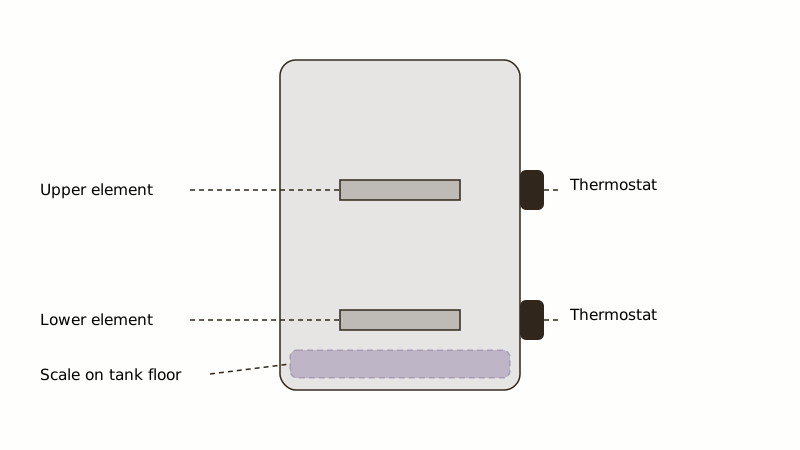
It can, and the culprit is usually a heater that still works badly rather than one that has died. A thermostat stuck on, a scale-coated element, a leak that keeps the tank reheating constantly, or a dripping hot tap all add kilowatt-hours quietly. This topic is filed under water heater repair, and what follows helps you pin down the cause.
Is a failing water heater really able to inflate the bill?
Yes. Electric resistance heating is expensive, so any fault that makes the unit run longer or heat more water shows up on the meter. A fully dead heater cuts the bill, but a partly failed one can run for hours. The bigger the fault and the longer it lasts, the bigger the effect.
For perspective, one national guide estimates a healthy 50-gallon electric tank at about $420 to $500 a year to run. That figure is a guide, not a promise for your home. If your bill climbed by well over what a heater could plausibly add and nothing else changed, the heater is a fair suspect.
Gas heaters are different. They use little electricity, so a high electric bill is rarely their fault, apart from a power vent blower or an igniter. If you have gas, look elsewhere first, such as the air conditioner or a pool pump.
Can hard water scale make an electric heater cost more to run?
Yes. Scale coats the elements and settles on the tank floor, so the unit takes longer to deliver the same hot water. The USGS says scale in water heaters raises heating costs and lowers electric heater efficiency. Ontario's 2025 report puts hardness at 91 to 177 ppm on average, depending on source.
Flushing the tank is the usual upkeep, and replacement timing covers when it helps. Scale also wears out elements sooner, which leads to the next question.
If hardness is the root cause, scale prevention is the next read, along with the local rules on softener discharge, which the city or water supplier can explain.
When does a bad element or thermostat need replacing?
When the heater runs constantly, the water is lukewarm or scalding, or the breaker trips. Elements and thermostats are replaceable parts, so the tank can stay if its shell is sound. Both involve live wiring, which means a plumber or electrician and the power off.
For the steps, see replacement elements.
Age matters: the Department of Energy gives tank heaters 10 to 15 years, so weigh any repair against electric heater replacement cost before buying parts.
What else can drive the electric bill up?
Plenty besides the heater. Air conditioning in a hot Inland Empire summer is often the biggest load, followed by pool pumps, older refrigerators, electric dryers and any new appliance. If you have a recirculation pump or a timer on the heater, a setting change can also matter.
Compare the monthly kilowatt-hour readings on your bill, not just the dollar total, since rate changes alter dollars without changing use. A utility's online usage chart can show daily patterns: a heater fault tends to produce a steady baseline lift day and night, while air conditioning peaks in the afternoon.
A high water bill alongside the electric one strengthens the leak theory; why water bills run high has the checklist.
How do you narrow it down at home?
Work through a short checklist, starting with the free checks. Compare your bills for the same months last year, because summer and winter differ. Then feel the tank and pipes, check the thermostat setting, look for moisture, and listen for sizzling or ticking, which can mean scale on an element.
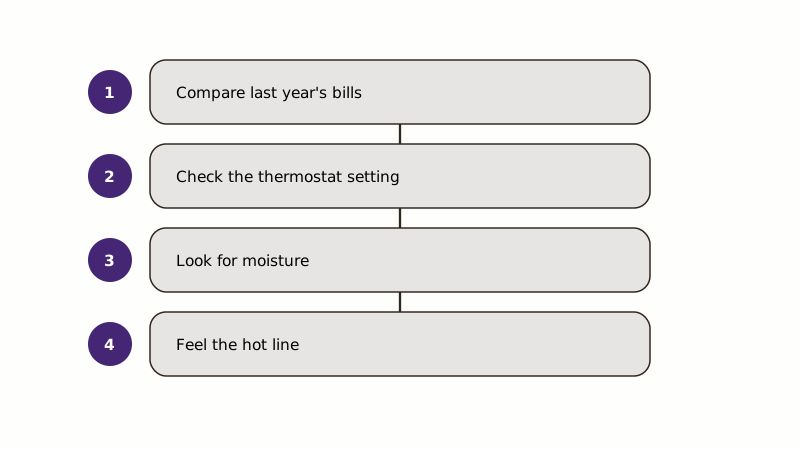
Try these steps:
- Breaker off first; then lift the access panel and note the thermostat setting.
- Look under and around the tank for moisture, rust or salt streaks.
- Check every hot tap, including bathrooms and the laundry, for slow drips.
- Note how long the hot water lasts compared with a year ago.
- Check whether the relief valve discharge pipe is wet.
If you have an electric heater, remember that opening the panel exposes wiring. Switch off the breaker first, and stay away if the area is wet.
What are the usual suspects behind a jump?
Think of four suspects: a thermostat that no longer cuts the element off, an element crusted with scale, a leak that pulls fresh water in for the tank to warm, and a hot line that drips or runs. Each makes the heater work harder than the hot water you actually use.
A stuck thermostat is the most dramatic: the water turns scalding, the relief valve may blow off, and the element stays on far longer than normal. Scale is the slowest. Per the USGS, hard water that gets heated leaves mineral scale, cutting equipment life and electric heater efficiency, so identical showers cost more as the years pass.
A tank leak sounds like a plumbing problem, but it is also an electric one. Every gallon that escapes is replaced by cold water that then has to be heated. The EPA's tally for one leaky household is above 9,300 gallons yearly; when the leak is hot water, the electric cost rides along.
The fourth cause is plain: a dripping hot faucet, or a shower mixing valve that bleeds hot into cold. See no hot water from electric heaters for the opposite problem.
Common questions
Does a leaking tank use more electricity?
Yes, in effect. Leaked water is replaced by cold water the heater has to warm, so a steady leak raises both water and power use. Seepage through the tank wall means a new heater, since the steel has failed. Shut the cold inlet, turn the power off, and book a plumber without delay.
Will turning the thermostat down save money?
Usually, because a cooler tank loses less heat to the room and heats less water. Many households find a modest reduction comfortable. Follow the manufacturer's guidance for your model, since each heater has its own recommended range, and check the thermostat only with the power switched off.
Can an old tank without insulation waste power?
Older tanks shed warmth into the surrounding air, so they cycle on and off through the day. The effect varies with the model and the room temperature. A heater in a garage can lose more than one in a conditioned space. A plumber can advise on insulation wraps, but check the manual first.
Where do I go once the checks point to the heater?
Begin with the free checks above, then ask a plumber to examine the thermostat, elements, relief valve and tank. The quote page opens that, and the home page explains the rest. Keep your bills and symptom notes handy to speed things up.