What should I suspect first when the bill climbs?
Look at the toilets first, the yard second, and buried or in-wall pipe last. A flapper that never seals, a sprinkler valve stuck open and a pinhole in a buried or in-wall line account for the bulk of surprises. Occasionally the meter or the billing dates are to blame instead. Each cause leaves a different fingerprint, which the sections below teach you to read.
Do the free checks before you pay for a visit. When one of them turns up something that needs hands-on help, the Chaffey Pipe and Drain home page shows what we can arrange around Ontario, Chino and Montclair.
How do I use the meter as a lie detector?
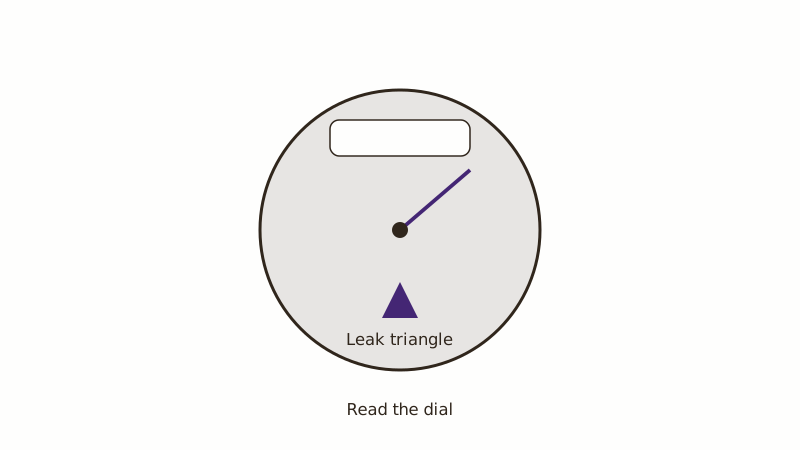
Treat it as an impartial witness. Close every faucet, make sure the dishwasher, washer and irrigation are idle, and look at the meter dial or the little spinning flow wheel. If it moves while nothing is on, water is getting out downstream of the meter, which is your side.
For a firmer result, record the reading, stay away from water for two hours (the EPA uses this same approach), and read it again. Leaks are common enough that the EPA has a whole annual awareness week for them, so a leaky house would not make you unusual. Jot down both numbers and the clock times. Expect a small lidded box at the curb or driveway edge. Renters: your landlord knows.
Dial moving, nothing wet in sight? Concealed sources get a full page: the hidden-leak bill page.
How much water can one toilet waste?
Plenty, silently. When the rubber flapper warps, tank water creeps into the bowl while the refill mechanism keeps the tank topped off all night as well as all day. A homeowner might never hear it. Here is the trick plumbers use: a few drops of dye, a ten-minute pause, a look at the bowl. Any color in the bowl afterward means a flapper that is not sealing.
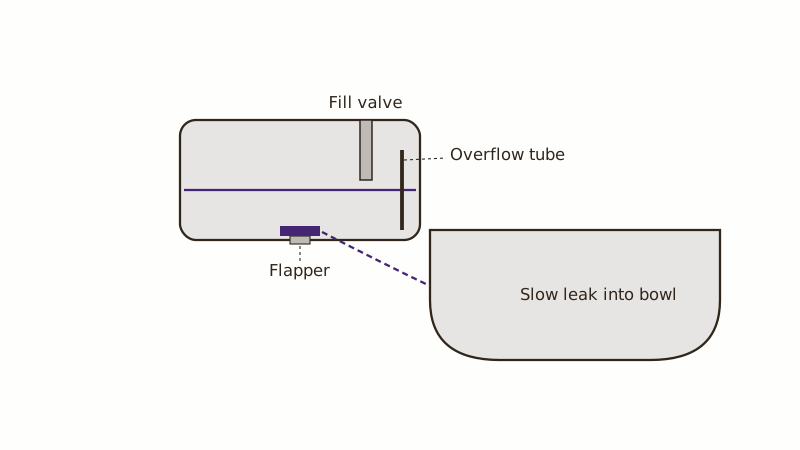
EPA guidance is to change flappers at least every five years, and carrying the worn one to the shop so the replacement fits. Most people can handle that swap. A tank that hisses or restarts by itself points at the fill valve, while fixing a toilet that runs lays out the steps. Hairline cracks in porcelain or a damp supply line call for a professional.
Do small drips and showers matter?
Over a month, yes. A faucet ticking away every second wastes gallons per day, and a shower valve that never fully shuts does the same while also burning gas or electricity on the heated half. Quick fixes like a new cartridge or washer often end the problem.
Put a measuring cup under the drip for five minutes and multiply to see your own number. Then widen your search to places people forget: the hose bib outside, the washing machine supply hoses, the ice maker line and the softener drain. For perspective on a single drip, there is a page on leaky faucets and bills.
Could the yard be eating my budget?
In the Inland Empire the garden is often the biggest swing factor. Heat waves, a controller that got reset after a power flicker, a cracked spray head or an irrigation valve stuck open can burn through hundreds of gallons in a night. If the bill climbs in summer and settles in cool months, look outdoors first.
Run each zone while you walk the property. You are hunting for geysers, mud around heads, water streaming down the gutter, and patches of lawn that stay green when it has not rained. Check the controller too, because daylight changes and brownouts can leave it running twice as long as intended. Drip lines hide cracks well: one split tube can seep for weeks.
Why is my bill high in the dead of winter?
Cold months are when yards barely drink, so a winter jump deserves suspicion. Likely suspects are a toilet or wall leak, a controller still on its July program, or a bill that covers more days than usual. Hot-line leaks hit the energy bill as well.
Set bills side by side. Count days per billing period, note any guests or a freshly filled pool, then line up this month against the matching month from twelve months back. A matching month points to weather and habits. A bigger gap, with no change in how many people live there, points to plumbing.
Might the leak be buried in a wall or beneath the floor?
These cost the most, since nothing looks off for months. Clues include a warm patch on a tile floor, baseboards that feel damp, a musty smell in a closet, paint that bubbles, or faint running water at 2 a.m. when the house is quiet.
Age shapes the pattern. Houses around downtown and Euclid Avenue may still carry galvanized steel or aging copper that gives way at corroded spots, while newer Ontario Ranch houses often use plastic pipe, which can leak at a fitting. Try splitting the search: turn off the main valve where it enters the house, then check how the meter behaves. A stopped dial puts the trouble indoors; a dial that keeps inching along blames the underground pipe out front.
Pros can locate hidden leaks with listening gear and tracing tools instead of demolition. See what leak detection costs and the broader leak help page.
Could the utility have got it wrong?
It happens, though less often than a leak. The City of Ontario's Municipal Utilities Company runs water and wastewater service inside city limits and can re-read a meter. Chino, Chino Hills, Montclair and Eastvale have other providers, so rely on the phone number on your own statement.
Arrive prepared with the account number, your two meter readings, and questions: was the reading estimated, how long was the billing period, is there an adjustment program for repaired leaks? Some utilities only consider relief after a repair, so ask what documents they need.
Who can diagnose it for me?
Call or send the form with your meter result, the home's age and where you suspect the water goes. Someone local gets arranged to come out, and the phones pick up weekdays, 9am through 5pm. Verify the license number with the state contractor board (cslb.ca.gov) before saying yes.
Read customer reviews of any contractor on your own, since this site publishes no testimonials, and get a paper quote that spells out the diagnosis, repair and parts. Begin with the quote page. Prices quoted online are guesses; only the written quote after an inspection is firm.
Common questions
Could a gas problem inflate the water bill?
No, gas and water meters are separate systems. A gas smell sends you outside, SoCalGas lists 1-800-427-2200 for gas leak reports; make that call from the sidewalk, and make it 911 when anyone is injured. A leaking hot water line does raise both statements at once, because you pay for the water and for the fuel or power that heated it.
Does a banging pipe mean I am losing water?
Not by itself. The thump you hear as a valve snaps closed is called water hammer, tied to pressure and loose piping rather than a leak. Still, high pressure can tire fittings until they seep. If pressure is the question, learn about adjusting the pressure regulator before a leak forms.
Who owns the leak, me or the utility?
Typically the supplier maintains everything before the meter box. Everything after it, even the buried part, is the homeowner's. Boundaries differ by provider, so ask yours to confirm. If the leak sits on your side, the repair is yours to schedule and pay for.
How big can a toilet leak get?
Big. A toilet that runs continuously may send thousands of gallons down the drain in one billing cycle. Federal guidance from the EPA flags worn flappers as a silent source of thousands of lost gallons. The dye test costs pennies and takes ten minutes, so run it before anything else.
Which maintenance habits keep the bill down?
Test toilets with dye twice a year, glance under sinks and behind the washer each month, watch the sprinkler system through each season, and check the meter now and then. Swap old flappers and cracked braided hoses before they fail, and look around the water heater base every few weeks.