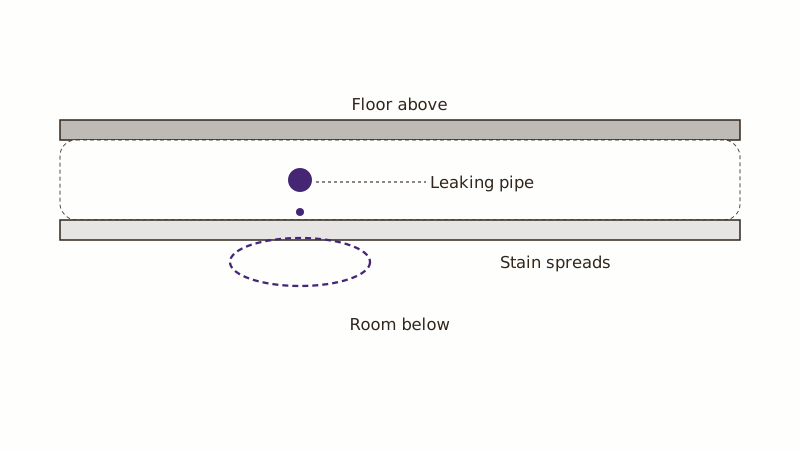
A wet ceiling is a two-part problem: stop the water, then find where it starts. Water follows framing, so the drip is often some distance from the break. If the flow is steady, close the main, keep people and electricity away from the wet spot, and take photos. The page is part of the leaks and burst pipes series and covers the first hour, sealants, mold, rentals and how a plumber hunts a hidden source.
What comes first when the ceiling starts to drip?
A steady flow means closing the main valve. Then kill that room's breaker, provided the panel is dry to reach. Shift furniture, park a bucket beneath the drip and photograph everything. Nobody should stand under a bulging or sagging ceiling, because it can fall.
Do not touch a wet light fixture or outlet. A bulge full of trapped water weighs a lot, and many plumbers suggest letting it drain through one small hole at the lowest point, bucket below, with you well clear of fixtures. Not sure? Leave it to a professional. With a bathroom or kitchen overhead, ask upstairs occupants to stop using water. The same urgent steps appear on a burst pipe emergency.
Who pays, and what if I rent?
In a rented apartment, send the landlord or manager a written notice with photos straight away. Building plumbing is theirs to fix, and a leak from the unit above is theirs to settle with that tenant. Renters insurance may cover your belongings. Owners should read the policy's wording on sudden water damage before hiring anyone.
Insurers often treat sudden bursts and slow leaks differently, and a long-running leak may fall outside cover, so call early. Insurance and burst pipes and water damage from a burst pipe list what to document. A high bill after a leak is a different question.
How do I trace the source?
Candidates: a supply or drain line overhead, an upstairs fixture (shower pan, toilet seal, tub overflow), an appliance hose, an attic water heater, or the roof. Timing helps. Flow that never stops suggests pressure in the line, while drips appearing only after rain suggest roofing.
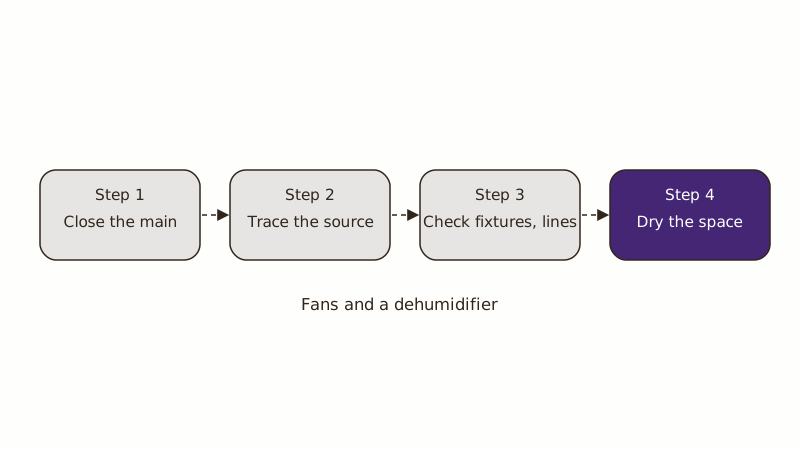
Look at what sits overhead. Under a bathroom, run the shower and watch the ceiling; a shower leak lists the usual culprits. A drip that begins when someone flushes is a toilet or drain. A meter turning with all taps off suggests a supply line. For the first call to make, see who to call for a ceiling water leak.
Will it grow mold, and how fast should it dry?
Damp drywall and insulation can grow mold, so dry the space promptly using fans and a dehumidifier, and remove soaked insulation or sagging drywall. An owner can clean a small patch; big or recurring mold calls for a remediation contractor. Never paint over damp material.
Basement and apartment ceilings follow the same steps, although a basement leak often comes from the bathroom or kitchen above with framing hiding the route. Anyone in the home with breathing trouble should have the area checked before staying. Keep dated photos of how the damage develops; they matter for repairs and any claim.
How long does a burst pipe repair last?
Access, pipe material and how much must be opened decide it. An exposed short run may be swapped in a visit, while a break inside a ceiling or wall means cutting drywall, mending, testing and patching. Drying and finishing add days, so request a schedule in writing.
When a burst pipe floods a house, the plumbing repair is only step one. Water removal, drying and rebuilding follow, often through another contractor. Work from $1,000 up falls under the state's contractor license rule, and the number can be checked on the state board's site. To get a plumber out, ask for quotes, and the figure comes first in writing. The home page covers other jobs.
What about a small leak, a stain, bubbling paint or a bulge?
A small drip or brown stain still means water got in, so locate the source before painting. Stains may be old and dry; outline the edge in pencil and see if it spreads. Blistered paint or a soft patch means moisture remains. Order of work: stop the leak, dry the area, patch, then paint.
Repairing a leaking ceiling means two jobs: the source (plumbing or roof) and the damage (drywall and paint). An owner can deal with a stain once the source is proven dry. Water around a light fixture, a crack that widens or a sagging ceiling is urgent: leave the room and call. Garage and kitchen ceilings follow the same logic.
Does any sealant hold on a leaking pipe?
Not for good, on a pressurized line. Epoxy putty or a repair clamp can slow a small leak on an exposed pipe briefly, if the water is off and the surface dry. Splits and failed joints defeat sealants, which never belong on gas lines or inside a ceiling.
Any patch is borrowed time; leave the bucket where it is. Plastic drain joints can sometimes be re-glued, but the proper repair removes and replaces the damaged length, and a plumber picks the method for copper, PEX or plastic. Products and their limits are in pipe leak sealants; copper pinholes get a page too, copper pipe pinhole leaks.
Common questions
Is a ceiling leak always a plumbing problem?
No. It may be the roof, an HVAC drain pan, an upstairs fixture or condensation. The pattern helps: a leak when it rains suggests the roof, a constant drip with taps closed suggests a pressurized pipe, and a leak only when a fixture is used suggests that fixture. A plumber can narrow it down, and a roofer handles roof sources.
When can the stain be painted?
Only after the source is fixed and the area is bone dry; paint over damp material and the stain comes back. Use a stain-blocking primer on a dry, repaired ceiling. Drywall that is soft, bulging or moldy should be cut away and replaced rather than covered.
Does the main valve need closing?
Yes, if the flow is steady or the source is unknown; it stops a pressurized supply leak. Dripping that continues afterward hints at a drain, the roof or water left in the pipe. Leave the water and the water heater off until a plumber has seen it.
Is there a risk of gas in a ceiling leak?
Water alone is no gas leak, but gas odor near the leak or an appliance means getting out and calling SoCalGas on 1-800-427-2200 from outside, or 911 if in danger. Attic water heaters burn gas and can leak either way, so say so if the leak is near one.
To locate water behind a ceiling, plumbers rely on a moisture meter, a thermal camera or an acoustic listener, along with pressure tests on the lines. That avoids cutting more drywall than needed. Method and access drive the price; see what leak detection costs.