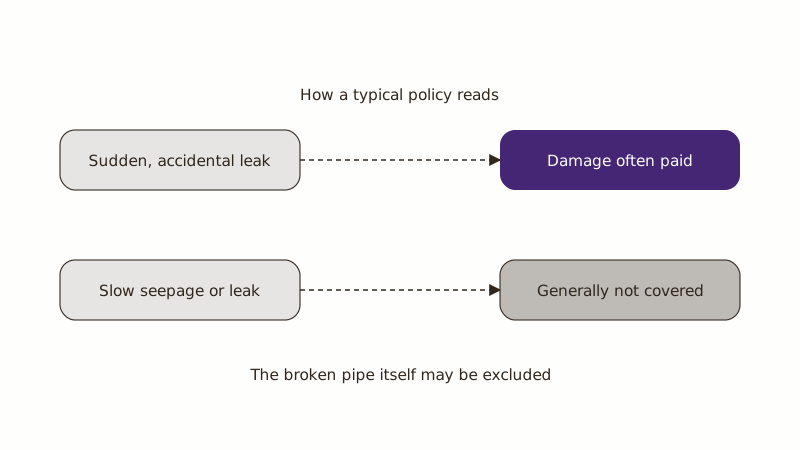
Possibly, in part. The state's insurance department says a typical California homeowners policy covers sudden and accidental water damage and generally leaves out damage from seepage or leaks. A slab leak sits in the gray zone: whether the policy pays for the repair, the access work or the resulting damage depends on its wording and on how the insurer classifies the leak. The pipe-repair side of it sits under help with leaks and burst pipes.
How do homeowners policies in California treat water damage?
The California Department of Insurance files "sudden & accidental water damage" under perils typically covered and "water damage cause by seepage or leaks" under perils generally excluded. Its guide adds that your contract's exclusions are what count, so read them closely instead of relying on a rule of thumb.
Here is how the department's two lists line up, and what each means for a pipe beneath the slab.
| Category | Typically covered | Generally not covered |
|---|---|---|
| Water | Sudden and accidental damage | Seepage or leaks over time |
| Condition | A pipe that suddenly fails | Wear and tear, maintenance, neglect |
| Flood | Not part of a homeowners policy | Flood needs separate coverage |
Slab leaks are failures in a water line beneath the concrete floor. A fast rupture that floods a room looks like sudden damage. A pinhole that has dripped beneath the slab for months looks like seepage. One failed pipe can land in either column depending on the facts.
Will the insurer call a slab leak sudden or gradual?
It turns on the facts and on the policy. A burst that floods the house is more likely to be handled as sudden and accidental. A slow hidden leak, noticed because the water bill spiked or one floor spot runs warm, is more likely to be labeled seepage. Only the insurer, reading your policy, decides.
Adjusters tend to weigh evidence: water bill history, what the plumber found, moisture and mold patterns, and pipe age and condition. A written report from the plumber, saying what failed and when it turned up, hands them facts. It does not settle coverage, but it helps.
Assume nothing either way. A denial that rests on the word gradual can be challenged, and a fast approval can still carve out part of the work. Ask the insurer to name the exact provision it is relying on.
Which pieces of a slab leak job could be paid for?
The job has three separate pieces: fixing the broken pipe, cutting into the slab or wall to get to it, and repairing what the water damaged. Policies treat each differently. Damage from a covered sudden leak is often paid, while the failed pipe and paying to get at it may be limited or excluded.
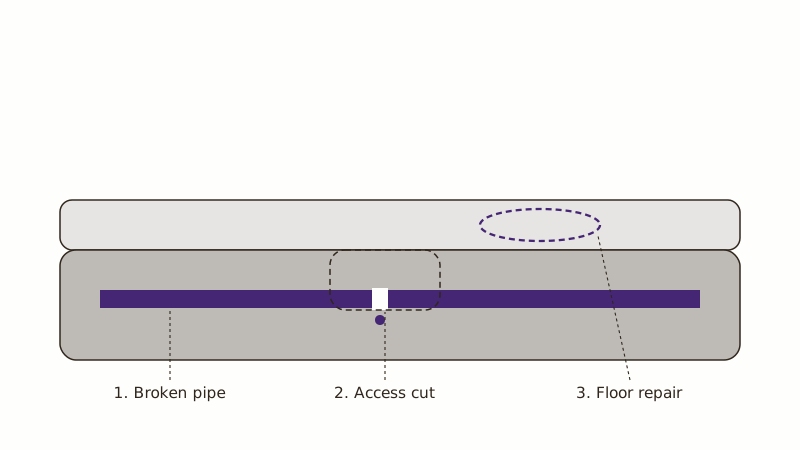
Wording varies, so read the definitions, the exclusions and any water damage or tear-out provisions. Some pay for access but not for repairing the line. Others cap the payout. The department suggests obtaining the complete policy, declarations page included, and asking your agent to explain anything unclear.
If the plumber recommends rerouting the line rather than digging, ask whether the insurer treats that as repair, which is slab leak repair or repipe territory, or as an upgrade that you pay for.
What is the right first move when I find a slab leak?
Close the main shutoff, then photograph and film the damage, tell the insurer or agent without delay and book a plumber to confirm the leak. The department's claims guide tells owners to move at once to locate the leak and stop it where it starts, and to save receipts for reasonable costs of protecting the property.
The same guide cautions that damage that follows could be left unpaid when no reasonable steps were taken to protect the house. Dry wet areas fast, since lingering moisture invites mold, and keep damaged materials for the adjuster when that is safe.
Log every call and email and keep copies of what you send and receive, with names, dates and what was said. Expect a proof of loss form and possibly an adjuster visit, and remember a first payment may be an advance rather than the final settlement.
To locate the leak, see slab leak detection and repair and leak detection pricing. When a bill is the only clue, read about high water bills without a visible leak.
What happens if the claim is turned down?
Get any denial in writing. The Department of Insurance says a denial must be written with specific reasons and must say that the department can review it. You can go to the claims manager with documents, write to the insurer's claims executive, hire an attorney, or phone the department's consumer hotline, 1-800-927-4357.
Collect the plumber's report, photos, water bills, repair estimates and the relevant policy pages before appealing, and ask the adjuster which provision drove the decision. The department may open a claims review after a Request for Assistance form and runs a mediation program for some disaster-related claims.
If the insurer pays for damage but not the pipe, or covers access but not the repair, ask whether that matches the policy text. Related pages: burst pipe coverage and pipes broken under a foundation.
Should I fix it even without an insurance payout?
Yes. A leak beneath the slab keeps losing water, and EPA figures show homes losing 9,300-plus gallons yearly to leaks. Water can undermine soil, soak flooring and feed mold, and waiting on a coverage decision can worsen damage and may affect what the policy pays later.
Have the plumber put an estimate and a description of the failure in writing, and do at least the emergency steps now. For repair figures, read what slab leak repair costs. Keep receipts for reasonable protective work, since policies often reimburse those.
On the plumbing side, request a visit and written price through Chaffey Pipe and Drain and its quote page; the visit comes from a local plumber. The business does not decide coverage or handle claims.
Common questions
Will the policy buy a new pipe?
Often only in part, if at all. In many policies the failed pipe counts as wear and tear and payment centers on resulting damage, while some also pay for access. Since wording varies, read the exclusions and ask the insurer to say in writing which parts of a slab leak job it will pay for.
Is a plumber's report worth having first?
Yes. A written plumber's report on what failed, where and when it was found gives the adjuster facts and helps separate a sudden failure from long-term seepage. Keep it with your photos, bills and receipts. It supports a claim, though the insurer still makes the decision.
Does making a claim affect what I pay later?
Possibly, and insurers do not all handle it the same way. Ask your agent before filing how a claim might affect renewal, and weigh that against the likely repair and damage cost. The department's consumer hotline, 1-800-927-4357, can answer general questions about policyholder rights.
How soon must I tell the insurer?
Promptly. The state guide says to tell your insurer or agent right away, and policies can carry their own notice and proof-of-loss deadlines, so read yours. Delay can let damage spread, and the insurer may decline ensuing damage if you did not protect the property.
What about mold after a slab leak?
According to the department, mold resulting from a covered peril can itself be covered. Mold tied to a leak the policy excludes is a separate question for the insurer. Signs of leakage that built up slowly may already involve mold, and the department advises contacting the claims adjuster at once. If the leak itself is excluded, ask how that affects mold.