
Insurance questions turn on policy wording, so this page describes what is typical in California and not what your insurer will do. As a rule, a homeowners policy responds to a pipe that fails all at once and shrugs off a drip that went unnoticed for months. It sits within our leaks and burst pipes pages, and we are plumbing people, not an insurer, an agent or an adjuster.
When will a policy actually pay out for a split pipe?
Most California homeowners policies cover water damage from sudden and accidental discharge: a supply line that splits, a fitting that fails, a water heater that ruptures, a hose that lets go. The damage to floors, walls, ceilings and belongings is what the policy pays for, minus your deductible. Whether the pipe is covered depends on the policy.
Insurers look at one question above others: was it sudden? A pipe that failed on Tuesday and soaked the kitchen the same day fits. A line that seeped behind drywall for a whole season, rotting the framing, usually does not. Spotting trouble early helps the house and the claim alike; signs of a burst lists what to watch for.
What is usually left out?
Gradual seepage and long-term leaks, wear and tear, floods from rising surface water, and often the cost of replacing the failed pipe. Sewer and drain backup typically needs an add-on called an endorsement. Earthquake damage sits under a separate earthquake policy, so ask how a quake-caused pipe break would be treated.
Flood is the one the California Department of Insurance singles out: standard homeowners policies exclude it, and coverage comes from a separate flood policy. Some policies set a window for continuous or repeated seepage, and one guide we read mentions 14 days as a common one. Policies differ, so look for words such as "continuous or repeated seepage" in your own document. Also check what the policy says about a home left vacant for long periods.
How do I protect the claim while it is happening?
Stop the loss, document it, and tell the insurer promptly. Close the main, take pictures before cleanup, save every receipt for fans, dehumidifiers and plumber visits, and keep wrecked items until an adjuster releases them. Insurers tend to expect that you stop the damage spreading, and they may contest extra harm caused by delay.
The steps in order:
- Turn off the main water valve; power to wet rooms goes off only if you can reach the panel while dry
- Photograph and video every wet area, with the date
- Phone the insurer or your agent about opening a claim, and log the time and the name of whoever answered
- Arrange the repair and drying, and keep every receipt
- Keep damaged materials until released
- Sign nothing you have not understood
The first ten minutes of the same event, with the valve and the power, are on the burst pipe emergency page.
Does the plumber's repair bill count?
Possibly part of it. Some policies pay for the access needed to reach a leaking pipe, such as opening a wall, yet not for the pipe. The line between them matters: cutting into a wall to get at the break, then restoring it, may be paid, whereas swapping the failed section may not be. Have the insurer state in writing which items it will cover.
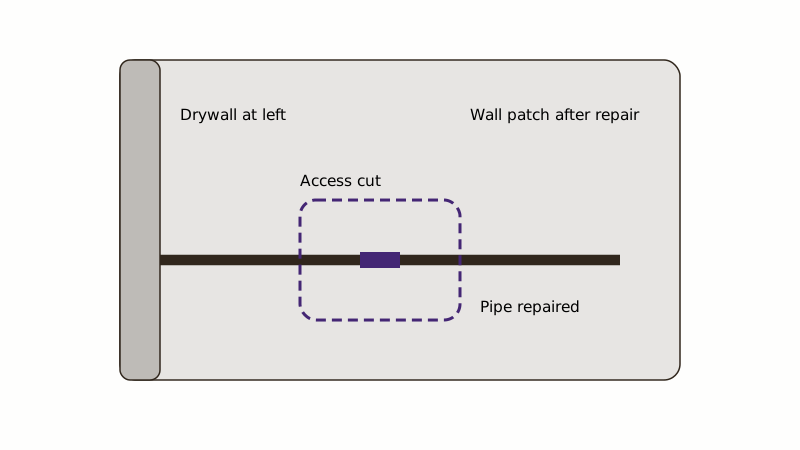
Request an itemized invoice from the plumber: tracing the leak, cutting the wall, new pipe, pressure testing and patching each on their own line. A clear invoice is easier for an adjuster to evaluate. If the plumber suggests that a pattern of failures points to a repipe, that is usually a homeowner decision outside the claim. Pipes beneath a foundation have their own page, broken pipes under the slab, and a companion on slab leak coverage.
I rent, or I own a condo. Who claims?
Renters carry their own policy for belongings, and the landlord insures the building. Tell the landlord in writing first, then your own insurer about your belongings. Condo owners often hold a policy for the interior, while the association insures the structure; the governing documents say where the line is. A pipe in a shared wall is usually the association's.
In older Ontario buildings and condo blocks near downtown, shared risers are the most common source of multi-unit water damage. Photograph every unit that was reached and ask for the association's insurance details early. Renters should also ask whether the landlord's insurer will pay for the temporary displacement.
How do I respond to a refusal or a low payout?
Request the refusal in writing together with the policy wording behind it. Read it against your policy, gather your photos and invoices, and ask the insurer to review. If you still think the decision is wrong, the state insurance department takes complaints, and some people consult an attorney or a public adjuster for larger losses. We cannot judge a specific claim.
Keep the timeline straight: when you found the water, when you shut it off, when you called, and what you were told. A denial for late notice or failure to mitigate is easier to answer when the timeline is clear. Dry the home regardless of the dispute, since the EPA warns that wet materials left in place invite mold, and the cost of mold adds up quickly.
Common questions
Will a claim for a burst pipe raise my premium?
It can, and it can affect renewal, but practice varies by insurer and by history. Ask your agent before filing a small claim whether it is worth the deductible. For a large loss, the claim is what the policy is for. We cannot predict what an insurer will do with your account, and it is worth asking before you decide.
How soon should I report the damage?
As soon as you can after discovering it. Policies require prompt notice, and a delay can complicate the claim or limit coverage for secondary damage such as mold. Close the valve, photograph the scene and ring the insurer that day if you can. Doubt whether a claim is worth it? Put that question to the agent.
What should the plumber's paperwork say?
An invoice that describes the cause and location of the failure, the work done and the materials, with separate lines for finding the leak, opening and closing walls, and pipe replacement. Photos from the plumber help too. Ask for the document before the visit ends, and check the contractor's license status on the state board's website.