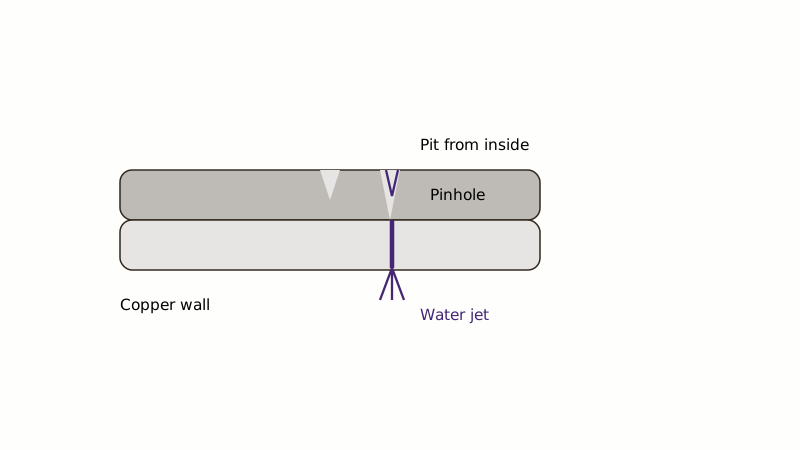
A pinhole leak is a hole in copper pipe no wider than a needle, formed when the pipe wall is eaten through from inside. Water sprays or seeps under pressure, so it can soak drywall, rot cabinet floors and push up your bill long before there is a visible puddle. To see the full range of leak problems, go back to leaks and burst pipes.
Why does copper develop pinholes?
Pitting corrosion, which is a small, deep pit that grows from the inside until it breaks through. Researchers still dispute the cause. Water chemistry, flaws on the pipe surface, leftover solder flux, microbes and electrical currents have all been named, and in a given house it can be a mix.
One water authority's summary of studies is a good example of how mixed the findings are. A 2012 study blamed excess solder flux from poor soldering workmanship. A 2018 study found pinholes may be likelier where chlorine levels run low or a house uses little water, and it floated bacteria as a possible cause, adding that this needs further study.
No source we found links pinhole leaks to Ontario's water supply, so nothing here claims it does. What is certain is that the pipe wall thins from within, and a plumber can only judge by looking at the failed section.
What should you do the moment you find one?
Shut the house valve, let the lines drain through the lowest faucet, and dry the area. A spraying leak can be wrapped in a rag with a plastic bag over it, steering the water into a bucket. Then phone a plumber. Small does not mean harmless.
Do not wait for a better time. The EPA's number for a typical leaking household is above 9,300 gallons yearly, and a pinhole under pressure left for weeks can pass it. Mold begins in damp drywall within a short time, so the cheapest hour to act is the first.
Wet wiring changes things. If water reaches outlets, the service panel or a ceiling fixture, stay back, touch the breaker only if you can get to it over dry floor; if not, go outside and dial 911. A spray you cannot stop belongs with burst pipe emergency help.
How do you know you have one?
Look for dampness that has no source: a spot on a wall or ceiling that returns after drying, a patch of warm floor, a musty smell, bubbling paint or a green-white crust on a copper pipe. A hissing sound near a wall and falling pressure are other tells. A bill that climbs while your routine stays put is a further tell.
Confirm movement at the meter. With the house quiet, note the reading, leave everything off for twenty minutes, then look again. A dial that advanced, or a low-flow indicator that spun, means the loss is happening inside your property line.
Pinholes can sit behind walls, under cabinets, in attics and under slabs, so the stain is usually not where the hole is. Water runs along framing and pools elsewhere. Leaks under the floor are handled in slab leak detection and repair.
How do plumbers locate a hidden leak?
With pressure tests, acoustic listening and sometimes thermal or camera work. A pressure test isolates zones of pipe to see which holds pressure. Acoustic gear picks up the hiss of escaping water through wall or floor. Infrared can show warm patches for hot lines. The method depends on where the leak probably sits.
Good detection keeps wall demolition to a minimum. A good detection visit ends with a marked spot, not a hole in every room. Detection is often billed separately from repair, so ask how the quote treats it; the page on leak detection cost goes into this.
Keep a record: when you noticed the stain, meter readings, and photos. They help the plumber narrow the search and help any insurance claim.
How is a pinhole leak repaired?
Four routes exist, from temporary to permanent. A clamp or epoxy putty buys time. A push-fit coupling can replace a cut-out section. A plumber can remove the bad stretch and sweat in fresh copper. When leaks keep recurring, repiping the run or the house is the lasting answer.
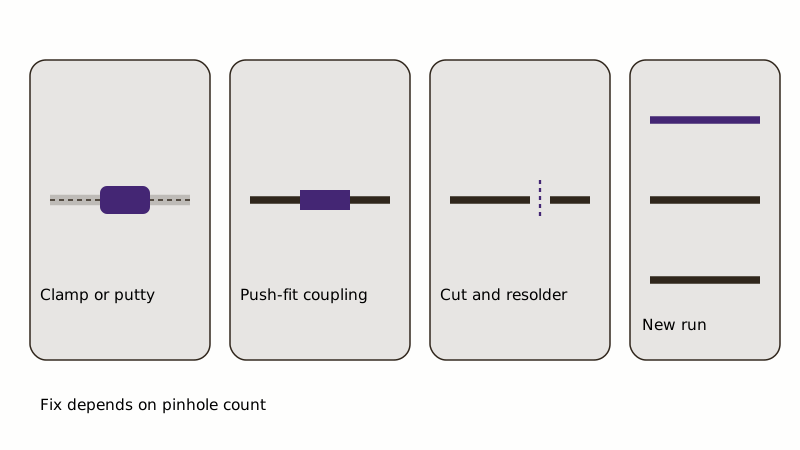
What each means:
- Clamp or putty: a short-term hold, not a fix, and not suited to a pressurized line you cannot watch.
- Cut-in section: the bad piece is removed and new pipe joined in. Done well, it is a permanent repair of that spot.
- Replacing a run: if the pipe is corroded along its length, swapping the whole run avoids chasing leaks.
- Repipe: where leaks appear in several places, the plumbing is telling you something, and a full replacement with new pipe is worth pricing.
The state's license rule kicks in at $1,000 of labor and materials, and with any permitted job. Ask Ontario Building at (909) 395-2023, or the Chino Building Division at 909-334-3251, how repipes are handled. For a one-spot job, repairing a leaking copper pipe has the details.
Is a pinhole leak a burst pipe?
Not in the usual sense. A burst pipe splits open, often from freezing or sudden pressure, and floods fast. A pinhole is slower and quieter, but it does not stay small: the water jet can erode surrounding pipe and the wall around it. The consequences, such as mold and damaged framing, can match a burst in time.
That is why a pinhole deserves the same urgency in practice even if it feels minor. Treat any active leak as something to isolate the same day. A leak you stop quickly costs a repair; one you leave costs a repair and a wall.
When does one pinhole mean you should repipe?
When it is your second or third, when they occur in different rooms, or when the pipe shows green crust and pitting along its length. One leak in a relatively new system can be a fluke. A pattern in an older system means the whole piping is aging, and each repair only buys time.
Weigh the cost of repeated repairs, wall patching and paint against a planned repipe. Request a look at the cut-out piece, where pitting shows on the inside. Weighing materials? Compare PEX and copper and read up on repiping a house.
Homes from the postwar decades in Montclair and Chino, and older houses near downtown Ontario, may carry original or mid-life copper, and older houses may also still contain galvanized sections that fail differently. A plumber can tell what you have at a glance.
Common questions
Does the leak return after a fix?
The repaired spot should hold if the joint is sound. Elsewhere the pipe may still be corroding, so another pinhole is possible. With old pipe, or leaks that keep appearing, discuss replacing the run, and request a description of what the removed piece looked like inside.
Can I fix it with epoxy or a clamp?
For a short time, yes, to slow water while you wait. These are stopgaps. A clamp can slip and putty may not bond on wet, corroded copper. Use them to limit damage until a plumber can cut in a proper section, and keep the main valve closed if the leak is active.
Is a pinhole leak an insurance matter?
Coverage turns on the policy, and sudden damage is often handled differently from gradual leaks. Study the policy or question the insurer, and photograph everything before repairs. For the general picture, with no promise of an outcome, read insurance and burst pipes.
Who should I call first?
Shut the house valve first, then phone a plumber, and a water damage company too if walls are soaked. The quote page is the starting point, and the home page explains what we do. A stain only grows while the leak runs, so do not wait.