Which is better for a house, copper or PEX?
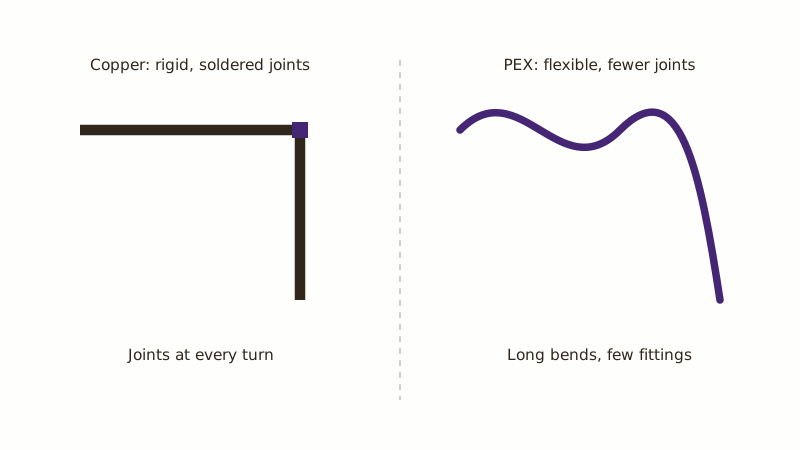
Neither wins everywhere. Copper is rigid, tough against sunlight and heat, and has been inside American walls for generations. PEX is flexible, needs fewer joints, handles a bump in the wall better and usually costs less to install. For most whole-house repipes in this area, PEX is the common choice, while copper stays popular for exposed runs and some buyers' preference.
Think about it as a job to be done rather than a contest. A tract house with a slab and a garage water heater has different needs from a 1920s bungalow near downtown. If you are weighing a full swap, repiping a house in Ontario explains how the project runs from first walkthrough to final pressure test.
Does PEX cost less than copper?
Usually, yes. The tubing itself costs less, it comes in long coils, and an installer can fish it through framing with far fewer joints, which trims hours. Copper needs soldered or brazed joints at every turn. Prices swing with the day's metal market, so ask for both options itemized in your quote.
No honest per-foot figure fits every house, which is why this page skips one. What moves the number is the count of fixtures, the size of the house, one story or two, how much drywall has to open, and whether a permit applies. For ranges on a whole-house job, read PEX repipe pricing and repipe house cost. Any price you read online, including here, is just a guide; what sets your number is the paper quote you get after a walkthrough.
Does PEX or copper flow more water?
Copper usually flows a little better at the same nominal size, because PEX has a thicker wall and a slightly smaller inside diameter. Even so, PEX laid out as home runs from a central manifold often keeps pressure steady at the fixtures. Where flow matters, such as a big soaking tub, the plumber can step up one tube size.
The nominal sizes you hear, one-half and three-quarter inch, describe the pipe family, not an exact bore. Half-inch PEX and half-inch copper are related, not identical. A layout decision matters more than the material: a long chain of fixtures on one thin branch will drop pressure in either. Already fighting weak pressure? This low-pressure page covers causes that have nothing to do with pipe type.
What is the service life of each?
Both can serve for decades when the water chemistry and installation are right, and neither comes with a promised number of years. Copper can develop pinhole leaks from aggressive water or stray electrical current. PEX will not rust or pit, yet it suffers by sunlight and by some fittings. Water quality and workmanship decide the outcome.
Ontario water is hard, and water district reports list hardness for the supply. The City of Ontario's own 2025 report shows hardness averaging 91 to 177 ppm, varying by source, and the supply blend can differ by address. Scale clogs fixtures and heaters more than it eats pipe, so it is worth pairing any repipe with a look at hard water scale prevention. If your copper is already leaking in tiny spots, read pinhole leaks in copper before deciding.
Which handles hot and cold weather better?
PEX is more forgiving of a freeze because it can expand, while copper and rigid plastic are more likely to split. Our winters rarely test that, so heat is the bigger concern here. PEX must be shielded from sunlight, and attic or exterior runs in the Inland Empire sun need cover, while copper shrugs off the sun.
Southern California homes seldom see a hard freeze, though a cold snap can catch an unprotected exterior line in Chino or Eastvale. Hot-water lines expand and contract with each cycle, so loose clips matter for either material. Insulation on the hot side saves wait time and heat, and a plumber will usually recommend it during a repipe. Sunlight is the specific enemy: a PEX line left exposed on a roof or along a south wall degrades.
Do crimp rings, clamps and push-fit couplers matter?
PEX connects with crimp rings, cinch clamps, expansion fittings or push-to-connect couplers, and each has a tool, a cost and a failure mode. Copper joins with solder or press fittings. The system matters less than the person installing it: a joint made carelessly will leak whichever way it was made.
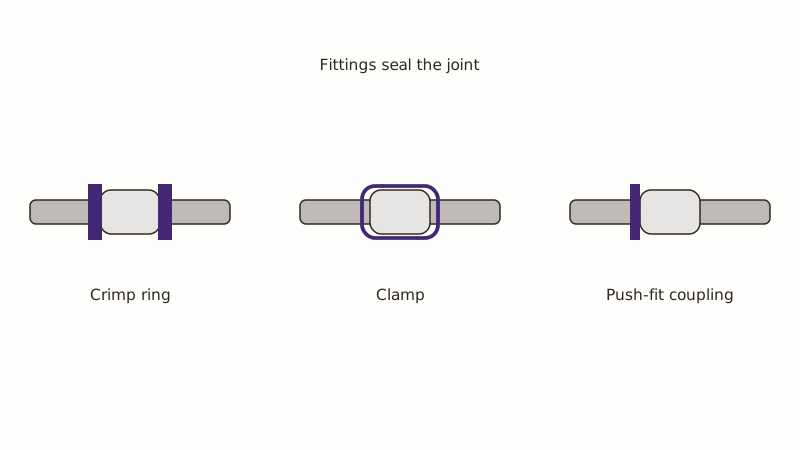
Here is how the choices differ in plain terms:
- Crimp or clamp rings: cheap parts, reliable when the tool is gauged, and tight spaces can be a challenge.
- Expansion fittings: a strong grip and good flow, requiring a specific PEX type and tool.
- Push-fit couplers: quick and good for repairs, but pricey for an entire house.
- Soldered copper: classic and durable, needs heat and care near framing.
If your house has brass fittings, the older sort that came in yellow brass can fail through dezincification. Red brass is generally the safer choice. Ask what is going into your walls, not just the pipe name.
Which one fits my kind of home in Ontario and the nearby cities?
Older houses near downtown Ontario and Euclid Avenue are often a copper-or-galvanized question, while newer neighborhoods in Ontario Ranch, The Preserve and Eastvale may be plumbed in plastic, though we have not verified materials by tract. Postwar tract homes in Montclair and Chino may sit in between. Check what you have before comparing, because a galvanized house and a copper house need different advice.
Look under a sink: shiny pink-orange tube is copper, gray threaded steel is galvanized, and colored flexible tube is PEX. Gray plastic with crimped metal bands, from a period when it was widely installed, is polybutylene and a different story; see polybutylene pipe replacement. For rusted steel lines, see replacing galvanized pipe. Area details live on the Chino and downtown Ontario pages.
What should a quote for either material include?
Ask for two priced options on paper, PEX and copper, each with parts, labor, drywall repair and permit lines. Remember the contractor board's rules: a license is expected for a $1,000 job, or for one needing a permit, and the board offers a free online search. Put the bids side by side and pick.
Use the quote page, and mention how many bathrooms and floors the house has. Someone local comes out to see your actual walls. The Chaffey Pipe and Drain home page shows the remaining services; the phone line is open weekday business hours.
Common questions
Is PEX tubing approved for tap water?
Yes, PEX approved for potable use is sold for exactly that purpose, and it is widely used in new homes. Look for the potable marking printed on the tube. Shield it from sun, keep fuel and solvents off it, and use an installer who follows the manufacturer's fitting instructions. Ask the plumber which brand and fitting type go into your walls.
Can I connect PEX to the copper I already have?
Yes. Transition fittings let PEX meet existing copper using transition fittings, which is common when only part of a house needs new pipe. The key is a proper adapter and, where metals differ, the right fitting material. Mixed systems are practical for partial repipes, such as replacing a failing section while keeping sound copper elsewhere.
Does PEX affect my water heater or taste?
New tubing can give water a slight plastic flavor for a while; running the taps tends to clear it in days. The heater itself works the same. Check the heater manufacturer's guidance on connections, since some call for a short metal section off the tank. The installer can sort that out during the visit.
Will a repipe need a permit?
Often, since a repipe alters the water system inside the walls. Rules differ by city, so phone the local building department with your street address before anything starts. The installer should say who files the paperwork, and afterward you should see the passed inspection.
Is copper better for resale?
It can help with buyers who prefer a familiar material, but many buyers and inspectors accept PEX without concern, and it is common in newer construction. A clean, documented repipe with a permit record matters more than the pipe name. Keep the paperwork and ask the installer for a written description of what was replaced.