No calendar triggers a repipe. You do it when the existing pipes are worn out, and for common materials that usually means well past the 40-year mark. One plumbing contractor's guide puts galvanized steel at 20-50 years, PEX at 40-50 and copper at 50-70 or more. Leaks and rusty water tell you more than the construction date. Considering the job now? Whole-house repiping is the place to begin.
Is there a set number of years between repipes?
No. Pipes get replaced when they fail or are about to, not on a timer. Material is the first clue, and the same contractor guide also lists CPVC at 50-75 years and cast iron drains at 75-100. Water chemistry can move any of those numbers up or down.
| Pipe material | Typical life (one contractor guide) |
|---|---|
| Galvanized steel | 20-50 years |
| PEX | 40-50 years |
| Copper | 50-70+ years |
| CPVC | 50-75 years |
| Cast iron (drains) | 75-100 years |
Read these as ranges with a fat middle, not promises. Two houses with identical pipe can age differently because one has gentler water, lower pressure or a cleaner install. A plumber who has actually inspected your lines tells you more than any chart can.
Which Ontario houses are most likely to need one?
The oldest lines sit where the oldest houses do. Near downtown Ontario and the Euclid Avenue historic area, some houses may still run galvanized supply lines, steel that rusts from within and slowly chokes flow. Postwar tract homes in Chino and Montclair are old enough that original copper or galvanized may be in the walls, depending on any past upgrades.
Newer neighborhoods, such as the large communities in Ontario Ranch and The Preserve, were built recently and likely use PEX or other plastic, so age alone does not put them on the list. A repipe there is more about an installation defect or a specific failure than about wear.
Ask the previous owner, or inspect the pipe visible beside the heater and inside sink cabinets. Dull gray threaded pipe suggests galvanized steel. Coppery brown tubing is copper. Soft plastic tubing colored red, blue or white is PEX. Still unsure? A plumber can name the material in minutes.
Does local water shorten pipe life?
It can, since water chemistry differs by supplier. Per Ontario's 2025 report, hardness averages from 91 to 177 ppm depending on source, while the Monte Vista Water District's 2025 report for the Montclair area shows a 135 ppm average and a range of 90.8 to 340. Scale narrows pipe and strains fixtures, but hardness alone does not condemn copper.
Pressure matters as well. Under California Plumbing Code 608.2, 80 psi is the ceiling for pressure inside the house, and pipes living near that number age faster. A regulator holds the number down, and adjusting a pressure regulator covers the basics.
Water that is aggressive to metal, high flow and old solder joints all play a part, which is why a repipe decision relies on evidence from your own house, not a regional average.
Which warning signs point toward repiping?
Watch for leaks recurring in separate spots, rusty or tinted water from several taps, pressure that slides downward year over year, copper pinholes and visible corrosion. A single leak is usually a repair. A pattern across the system suggests pipes near the end.
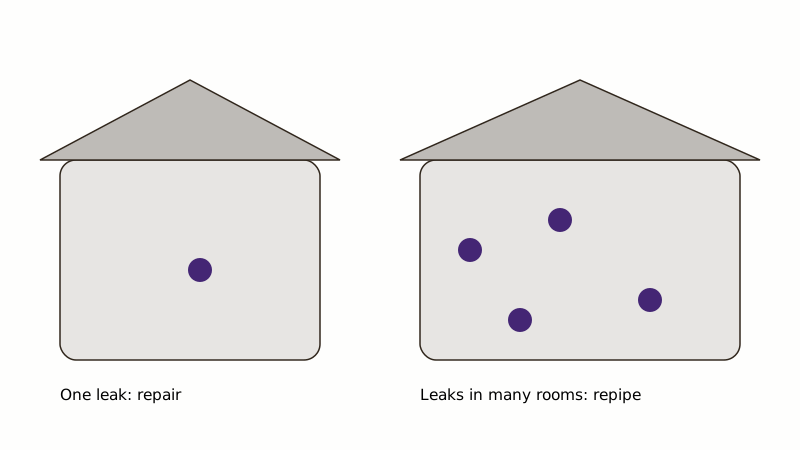
Location counts. One pinhole in an exposed run is a patch job; three in a year, in separate walls, is a pattern. Pinhole leaks in copper draws that line, and replacing galvanized pipe deals with the steel case. Polybutylene is another plastic that plumbers flag in some older houses; see polybutylene replacement.
Low pressure at every faucet while the street pressure is fine suggests mineral buildup inside the pipes. Rust-colored water that clears after running the tap points to corroding steel. A plumber can cut a short sample out of a line and show you the inside.
Is repiping worth it compared with repairing leaks one at a time?
When failures keep coming, yes. Each leak repair opens a wall or floor, floods a cabinet and costs a visit, and the next failure is already brewing nearby. A repipe replaces the whole supply system once. When there has been one leak in twenty years, repairs are the cheaper choice.
The tipping point is the pattern, not the age. If you are repairing every few months, add up what you have spent and compare it with what a repipe costs. Also factor in damage, such as wet drywall, flooring and mold, which is where leaks get expensive. For older houses, the page on pricing plumbing replacement in old homes has figures.
Slab leaks are their own case. Lines beneath concrete are expensive to reach, so rerouting overhead can beat digging. That tradeoff is worked through in slab leak repair versus repiping.
How do I plan a repipe without being surprised?
Have the quote written, with the material (PEX or copper), the scope (every fixture or one section) and who patches the walls. Ask about the permit as well. A repipe sails past the $1,000 mark, so a California contractor license applies.
PEX is common for repipes today because it flexes and is quicker to run; copper lasts long and has its fans. PEX versus copper compares them. Ask the plumber for timing, since you may be without water for stretches of a day, and ask what the plan is for kids, pets and work-from-home hours.
To begin, give your house details on the quote page of Chaffey Pipe and Drain; a plumber from the area looks the house over before pricing.
Common questions
Can a house go decades without any repipe?
Yes. Copper that is well installed with reasonable water and pressure can serve for generations, and PEX and CPVC have long spans too. The need arises when leaks multiply, water turns rusty or flow drops. Absent those signs, an old house can run for many years on its original pipes.
Can I identify my own pipe material?
Look first at exposed pipe at the point of entry, by the water heater and in sink cabinets. Gray threaded steel is galvanized, reddish metal is copper, and flexible colored tubing is PEX. Walls hide the rest, which is when a plumber's camera helps.
Is repiping covered by insurance?
Usually not. Replacing worn pipes counts as maintenance, and the state insurance department's guide lists wear and tear and leaks over time among generally excluded items, though sudden accidental water damage is typically covered. Your own policy governs, so read its exclusions and ask the insurer.
How long is the house disrupted?
A house usually needs several days, and the supply is off for stretches of each. House size, fixture count, wall access and patching all shift that. Request a written schedule and decide ahead where you will cook, wash and use a toilet during shutoffs.
Should someone stay home while the work happens?
Ideally yes, to open doors and answer questions as the plumber works through the house. Tell the plumber about pets, sleeping shifts and any room you would rather keep off limits. Clear space around the water heater, sinks and any closet holding pipes, and mention pets or rooms with delicate belongings beforehand.