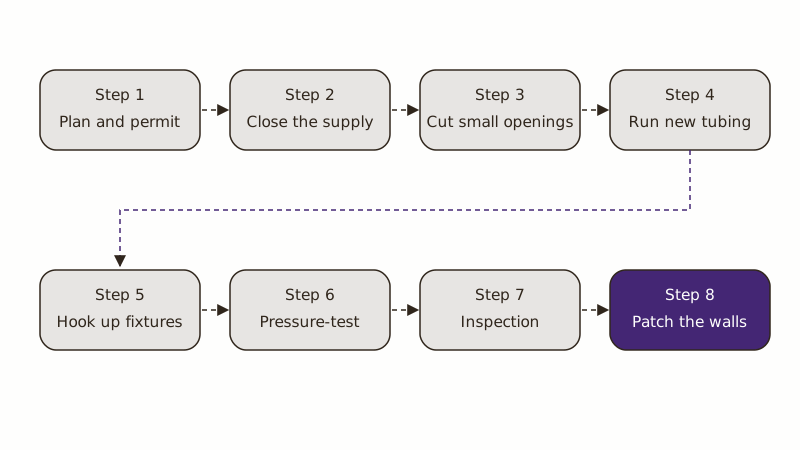
Repiping means pulling out the old water supply lines and running new ones, from the point of entry at the street side to every tap, toilet, appliance and the water heater. The drain system is separate and normally stays put. Few owners attempt it: permits, a contractor who holds a California license and several days of disrupted water come with the territory. This is the how-to companion to repiping a house: the work in order, and the decisions that stay with you.
What does a repipe actually involve, in order?
Nearly every job follows one sequence: draw up the layout and obtain a permit, close the supply, cut small openings in walls or ceilings, run new tubing from the main to a manifold or branch points, hook up each fixture, pressure-test, book the inspection, and finally patch drywall. The contractor does all of it.
Your decisions bookend the work. Beforehand: pick the material, fix the scope (every fixture, hose bibs, the heater connection) and get the figure signed. During: expect long stretches with no supply while connections are made. Afterward: collect the inspection sign-off, run every faucet, and file the paperwork. The case for starting is in why repipe a house, and the timing question in how often to repipe.
Which pipe goes in, PEX or copper?
PEX is bendy plastic tubing that turns corners with fewer fittings, which speeds up work in walls and attics. Copper is rigid, soldered metal with a long record. In many newer Ontario Ranch homes the supply pipe is PEX already, while older homes near downtown may have galvanized steel or copper. Either can be right.
Weigh access, budget, local code and your water. Ontario's latest water report (2025) gives hardness averaging 91 to 177 ppm depending on source, and the blend at your address can differ, so ask how the pipe copes with scale and whether fittings stay reachable. The Building office can confirm approved materials. A fuller comparison lives in PEX versus copper, with pricing in PEX repipe cost.
What changes when the house sits on a slab?
Contractors on a slab commonly abandon the old lines in the concrete and drop new pipe from the attic down inside walls, so nobody jackhammers the floor. Fixtures are fed from above. You get more holes in walls and ceilings, but far less demolition than cutting the slab.
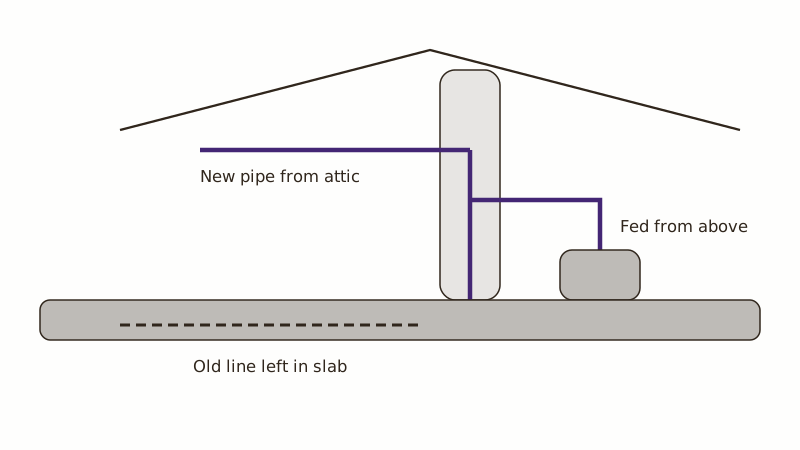
When only one line leaks and the rest is sound, a plumber may reroute just that section; slab leak repair or repipe sets the two side by side. The trade-off is real: rerouting leaves old pipe buried and fixtures fed from new directions, so a contractor should explain exactly which lines are dead and which stay in use. Ask for a simple sketch of the new routes before work starts.
What needs agreeing in writing before work starts?
Check the license number at the state contractor board's website, then gather two or more written estimates covering identical work. Compare line by line: material, fixtures included, permit and inspection, drywall patching and paint, cleanup, schedule, and how payment is split. A very low bid usually leaves something out.
Read the exclusions. Many repipe quotes end at a rough patch, so painting may cost extra. Ask who pulls the permit, who shows up daily and how water returns each night. California limits home improvement deposits, which makes a large advance payment a red flag. Project cost swings with house size, fixture count and access; repipe pricing is worth a read before the first call.
Could I repipe the house myself?
Realistically no. Under California rules, anything totalling $1,000 or more, or anything that needs a permit, goes to a contractor holding a license, and a whole-house repipe is both. An inspector checks pressure, joints and supports, and any mistake ends up sealed behind drywall.
Small pieces differ. Replacing one braided supply line under a sink is ordinary owner work. Rerouting a branch, cutting into the main, or going near gas piping is not. Building, at City Hall, 303 East B Street, (909) 395-2023, can say what needs a permit. Ring before buying materials rather than after.
What gets left behind in the walls?
Old pipe is either pulled out where it is reachable or abandoned in place when it sits in a slab or sealed cavity. Openings in drywall are cut where pipes run, then patched. Expect textured patches, not invisible ones, unless you pay for repainting.
Expect dust and noise. Pull furniture off walls, cover floors and keep pets clear. If the house has galvanized lines, galvanized pipe replacement shows how that old pipe ages; polybutylene pipe replacement does the same for another failing type.
To line up a plumber, ask for quotes; the price is written out first, before any work. The home page lists the other jobs.
Common questions
How many days will the house be torn up?
House size, fixture count and wall access set the length. Ask the contractor for a written schedule that names the days the water will be off. Bigger homes and slab reroutes run longer, and inspections can add time. Ask who pays for time lost if the inspector orders a fix.
Is a permit needed for a repipe?
A repipe normally needs a building permit in California cities. Ontario's Building office, (909) 395-2023, can confirm what applies at your address; the contractor should pull the permit under their own name. Unpermitted plumbing may complicate a later sale or insurance claim, so do not skip the step.
Will the walls need to be opened up?
Usually yes, in small access holes. A slab-on-grade house is often repiped through the attic, with holes at the top and bottom of each wall run. Some pipes can be fished through walls, which reduces damage. Ask for a drywall repair plan in the quote, including whether painting is included, before you accept.
What tells you the pipes are finished?
Repeat leaks in different places, rusty water, falling pressure, and pipe families with a poor record (galvanized, polybutylene) all count. A single leak alone is no verdict. An inspection by a plumber should say if one section or the whole house deserves the work.
Is it possible to live at home during the work?
Many people do, but expect days with limited water, plus noise and dust. Ask how the contractor handles the water supply overnight, where you can get a temporary supply for drinking and flushing, and which rooms are off limits. If you have small children, medical needs or pets, plan a short stay elsewhere.