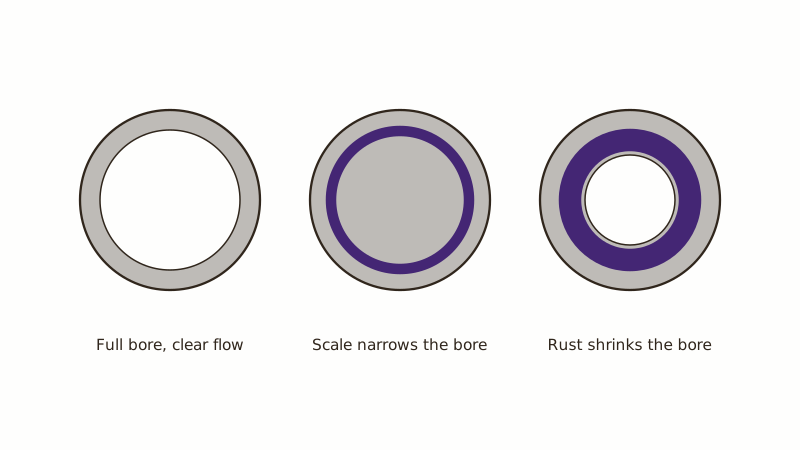
People repipe a house because the water supply lines inside the walls have stopped doing their job: they leak again and again, they've rusted from within, or the material has a poor track record. Replacing everything costs more up front than fixing one leak, yet it can end a cycle of repairs. This page lists the real reasons, so you can judge your own house. The overview is on our repiping page, and our other work is on the Chaffey Pipe and Drain home page.
Which symptoms say the pipes are finished?
Watch for brown or metal-flavored water, thin flow from several taps, leaks that pop up in new spots, and unexplained marks on a wall or ceiling. Any single item might be a local fault. Several at once usually point to tired pipe.
Brown water that clears once the tap has run a minute hints at corroding steel. Weak flow across the entire house, rather than at one tap, suggests the inside of the pipe has narrowed. A fresh pinhole leak on copper that was patched last year, and another this year, is the pattern repipe jobs are made for.
Look for damp patches on drywall, a musty smell in a closet, and a meter dial still creeping when every tap is shut. Any of these deserves a plumber's eyes before the drywall rots.
Why does age matter so much?
Pipe wears out slowly and unevenly. Galvanized steel installed in the early and middle 1900s rusts on the inside until the bore shrinks. Copper may pit and weep at pinholes. Certain plastics sold in particular decades have failed more often than others. Age alone doesn't force a repipe, but a house with original pipe and new symptoms deserves a serious look.
Around Ontario the age mix is wide. Downtown streets and the Euclid Avenue historic area have houses from long before PEX, so galvanized or other older piping may still be there. Postwar tract homes in Chino and Montclair come from the next wave of building. Newer areas such as Ontario Ranch were built with modern materials and are far less likely to need a repipe.
In Chino Hills, the city's housing element says most pre-1970 housing is in Los Serranos and Sleepy Hollow in Carbon Canyon, and it flags low water pressure there. That's a note about older housing and pressure, not a diagnosis of any one house.
Which pipe materials are the usual suspects?
Galvanized steel is the best-known one: it corrodes and shrinks in bore. Polybutylene, a gray plastic pipe fitted in some earlier homes, has a reputation for failing at fittings. Copper is durable but can pit and leak in spots. Each has a dedicated guide below.
For detail, try replacing galvanized pipe, replacing polybutylene and pinhole leaks in copper. Choosing a replacement? PEX or copper is the usual debate.
Lead deserves a separate line. Ontario states that its water service lines are lead-free. That speaks for the utility's lines up to your meter and says nothing certain about plumbing inside a given house. A plumber can inspect, and any job touching lead or asbestos has to follow the official handling rules.
Can hard water or high pressure shorten pipe life?
They can contribute. In the city's 2025 report, hardness averages 91 to 177 ppm across its supply sources, and mineral scale can slowly build up inside pipes and fixtures over years. High pressure strains joints too, and the code names 80 psi as the limit.
Read pressure with a cheap gauge on an outdoor spigot; high readings are usually fixed with a regulator, not a repipe. If the real issue is pipe condition, a regulator won't cure it. Scale and pressure are pieces of the puzzle, not a verdict on their own.
Our notes on adjusting a pressure regulator explain the check. Remember that each source blend differs by address, so these figures describe the city's reports, not your own tap.
When is a repair enough, and when is a repipe the better call?
Patch if one run has failed and all the other pipe tests sound. Repipe if leaks keep surfacing, if the material is known to fail, or if a remodel has the walls open anyway. The deciding factor is often how many repairs you've already paid for.
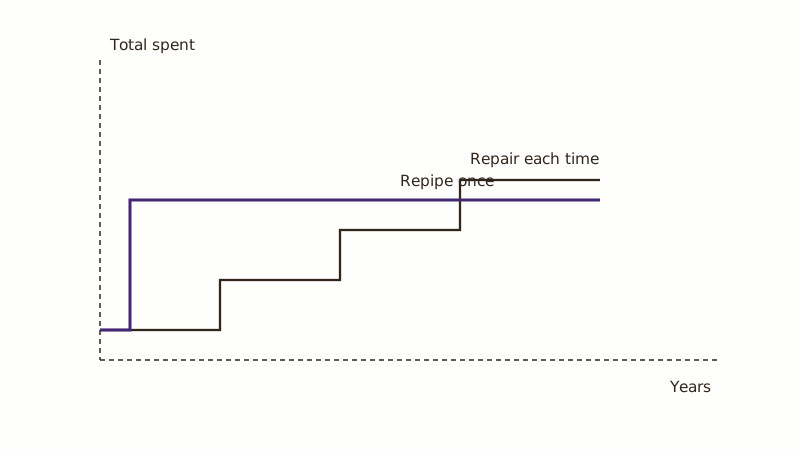
Think in terms of cost over time. A single leak repair is cheap. Five repairs across three years add up and still leave you with hidden risk. Ask a plumber for both options in writing and compare. For the timing question, see how often to repipe, and the repiping cost page gives price ranges.
A leak beneath a concrete slab raises the same dilemma, covered under slab leaks: fix or repipe. Expect permit paperwork, and note that The contractor-license rule in California applies from $1,000 in combined labor and parts.
Common questions
Once I say yes, how soon is it over?
Several days is common, and a large house or finished walls stretch that. Expect the taps to run dry for some hours on each working day. The schedule belongs on the written quote, along with drywall repair time if that work is in the scope.
How should I size up a repiping company?
Get the proposed material and the reason for it, whether wall repair is covered, the name on the permit, and how payments are staged. California limits home improvement deposits, so question any large upfront payment. Ask how a surprise inside a wall gets handled.
Am I required to stay home during repiping?
Someone should be there to start the job and approve the plan. During the work you may prefer to be away, since there is noise, dust and water shutoffs. Plan for a few days of disruption and ask how the crew will protect floors and furniture.
Will new pipes improve my water pressure?
Frequently, when old pipe was clogged with rust or scale, since the new bore is wide and smooth. If pressure was low because of the supply or a regulator problem, new pipe won't change that. A plumber should check pressure first and tell you which cause is more likely.
Can I repipe just the part that leaks?
Sometimes. A partial job swaps one stretch only, say a bathroom branch. That's cheaper, yet whatever stays behind shares its age and could be next. Ask for a partial option and the full option side by side so you can weigh the trade.