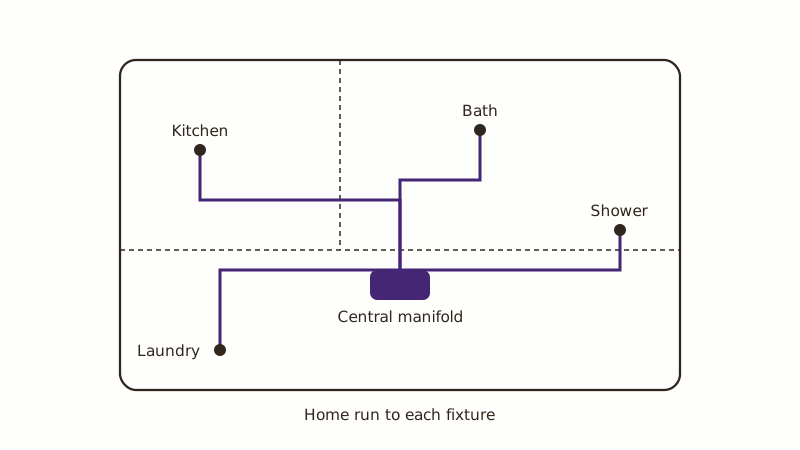
For a typical two or three bedroom house, expect a bill beginning around $4,000 and ending at about $15,000. The guide we leaned on most averages near $8,000. An older house pushes toward the upper half, because walls are harder to open and more fixtures hang off long runs. Partial work costs less. The home page explains how to ask for a priced quote on your own house.
What is the all-in figure for an old house?
The repiping guide's span for a standard two to three bedroom home runs from $4,000 up to $15,000. A second guide lists pipe replacement for a smaller job starting at $1,500, topping out at $5,000. Fixture count, pipe choice and wall opened decide where you land.
By home size, the same guide shows PEX running from about $2,500 for a one-bath house under 1,200 square feet up toward $14,000 for four baths over 2,500. Copper costs more at each size, starting around $4,500 and passing $20,000 for the largest. Each extra fixture adds a few hundred dollars. Nothing here is an Ontario price.
Why does an older house cost more to repipe?
Access. Old houses often have plaster or tile over the walls, and the galvanized steel or early copper inside sits in awkward places. Every wall that gets opened must be patched afterward. Roto-Rooter notes that mineral buildup and rust in older galvanized pipes can narrow them and eventually cause failure.
Locally, older plumbing is more likely in the long-established parts of the area, such as downtown Ontario and the Euclid Avenue historic area, than in newer communities such as Ontario Ranch, where a whole-house repipe is rarely the question. Check the year built and the pipe material for your own house. For galvanized lines in particular, see replacing galvanized pipe.
Does PEX or copper cost less?
PEX does. The repiping guide puts PEX at $3 to $7 each installed foot, copper at around double. Whole-house totals follow: PEX starting at $4,000 and reaching $10,000, with a service life of four to five decades or longer; copper starting at $6,000 and reaching $15,000, lasting seven to ten decades. CPVC lands between the two.
Modernize's material-only numbers are lower: about a dollar or two a foot for PEX, two to four for copper. Labor, the bulk of any repipe, explains why the two guides differ. Material choice has other trade-offs, which PEX versus copper covers, with prices in PEX repipe cost.
Is it possible to redo just the worst section?
Often. That guide puts a partial repipe in the $1,000 to $4,000 band. The plumber might take out the run beneath a bathroom, or the stretch with the most leaks. The catch: whatever stays keeps aging, so ask what the plumber sees in the remaining pipe before agreeing.
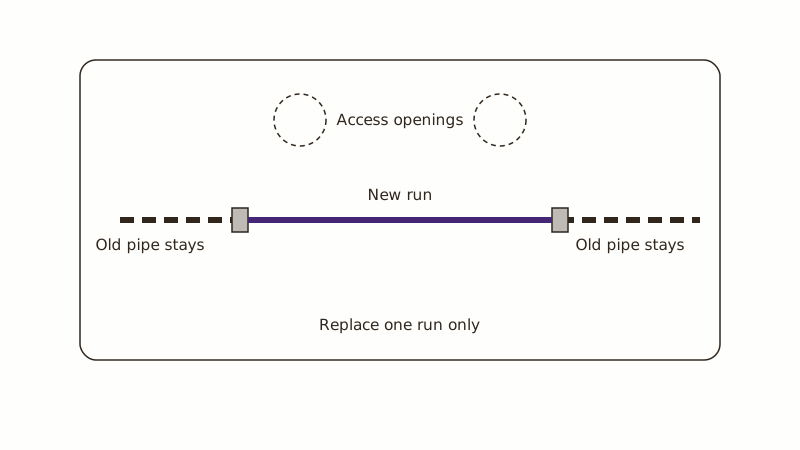
Lead pipe replacement is listed from $4,000 climbing toward $12,000. Polybutylene is covered under polybutylene replacement. A leak below the slab may be solved by rerouting through walls or attic instead of redoing everything; the trade-off is weighed in slab leak repair or repipe.
What extra costs come with the pipe itself?
A permit, wall repair and several days of disruption. The guide shows a plumbing permit at $100 to $400, which the plumber usually applies for, and an inspector who looks before the walls are closed. Permit questions in Ontario go to the Building counter on (909) 395-2023. California treats repiping as contractor work.
Access holes receive a basic patch and no finish. Texture and paint come to a further $1,000 to $3,000 in the guide, though hiring that out separately can save between $500 and $2,000. Allow two to five days for a standard house, and up to a week where pipes sit in finished walls.
When is replacement really warranted?
Repeat leaks shout loudest. Rusty or discolored water, weak pressure all through the house and pinholes that return after patching add to the case. When one repair is followed by another within months, the pipe is likely near its end. Flow and pressure tests, plus a look at a cut section, settle it.
For the reasoning, read why repipe a house and how long pipes last; the repipe cost page covers pricing. A job this size merits a second opinion.
How do I read a repipe quote?
Ask for two itemized bids on identical work, then compare material, fixtures, wall repair, permit, schedule and cleanup. Each bidder should provide a license number, which the state's contractor board has a public lookup. A license is needed once labor and materials together reach $1,000, and for permit work at any size.
Home improvement deposits are limited by state law, so a large advance payment is a warning. When the quote arrives, ignore every guide's figure, because your price is whatever a plumber writes after seeing the house. Start by telling us about the house through the quote request page.
Common questions
Will it turn the house upside down?
Two to five days for a standard house, per the repiping guide. A small one with open access might finish in two, while a large house with pipes behind finished walls can stretch to a week. The water gets shut off for parts of most days, and drywall patching comes later.
What do I bring up with the plumber first?
The license number comes first, then which material is quoted and why, how many fixtures are counted, which of you applies for the permit, who patches the walls and what warranty applies. Add how water will stay on between stages, and ask for each answer by email.
Do I need to stay home?
At the start especially, to agree fixture locations and open up each room that has plumbing. Cabinets and closets need clearing. If you cannot be present, a trusted adult may let the plumber in, once the price is settled on paper.
Might a whole-house job be avoidable?
Sometimes. If leaks are confined to one stretch and the remaining pipe tests sound, a partial repair may do the job. Ask for a written reason before accepting a whole-house recommendation, and consider a second quote from a different plumber so you can compare.