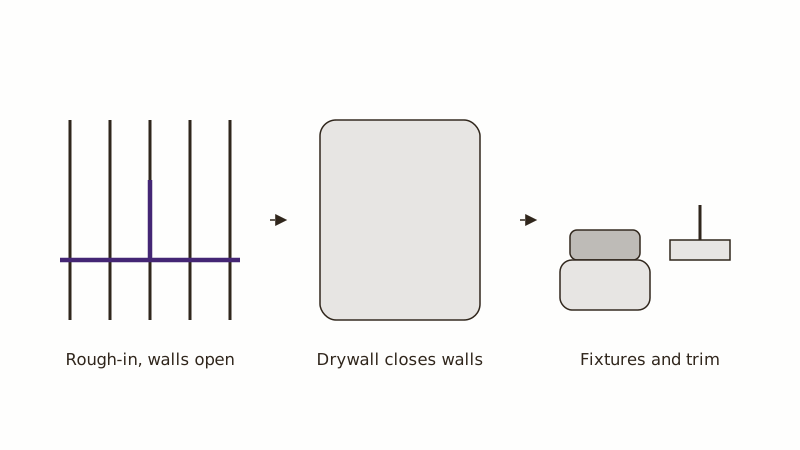
Budget guides for new construction land in a wide band. One estimator's commonly cited planning range is $4 to $8 per square foot for plumbing, and the same source puts a typical two-bathroom new home at $6,000 to $12,000. Another puts a 2,000 square foot house at $8,000 to $15,000 all in. Sources disagree because pipe, fixture count and layout change the job, and none of them is an Ontario quote. The home page shows how we arrange plumbing work; below, the number is taken apart.
How much should I budget for the plumbing in a new home?
Planning guides give a range, not a price. One source lists about $4 to $8 per square foot, so 1,500 square feet is $6,000 to $12,000 and 2,000 square feet is $8,000 to $16,000. Another puts a 2,000 square foot home at $8,000 to $15,000 all in. Only a written quote built from your own plans gives the real price.
The two sources do not line up exactly, and one of them has a rough-in rate per square foot that does not match its own whole-house figure, so treat both as a planning guide. Per-square-foot numbers work best for early budgeting. Once you have plans, a plumber counts fixtures, measures pipe runs and prices the job from that list. Expect the real figure to move with house size, bathroom count, and what the house is built on.
What is included in rough-in and what is finish work?
Rough-in is whatever goes in while the walls are open: supply lines, drain and vent pipes, gas piping to appliances. Finish or fixture set is the second visit: toilets, sinks, faucets, tubs, showers and the water heater hookup. One source puts rough-in for a 2,000 square foot house at $8,000 to $13,500 and finish at $2,000 to $5,000 or more.
Ask whether a quote includes both stages and whether the fixtures themselves are supplied. A bid that covers rough-in only looks cheaper and leaves the second stage open. The same source lists rough-in per fixture: a sink at $350 to $500, a dishwasher at $400 to $650, a washing machine hookup at $300 to $1,500, and a water heater at $400 to $1,800. For each item on your plans, the plumber's written quote is the price that counts.
What pushes the price of new-house plumbing up or down?
Bathroom and fixture count come first: every added fixture means more pipe, fittings and labor. Then the foundation: a slab means drain lines are set before concrete is poured, while a raised foundation gives access. Pipe material, a kitchen with an island sink, a laundry, a second water heater and gas lines for the range or dryer all add up.
Layout matters more than square footage. A compact plan with bathrooms stacked or back to back needs far less pipe than a sprawling one. Anything that is changed after the walls are closed costs more, so settle the fixture list before rough-in. Upgrades such as a tankless water heater, a soft water loop or a pot filler change the job.
What should I know about building in Ontario?
Water and sewer connections in the city of Ontario come through the Ontario Municipal Utilities Company, and gas comes from SoCalGas, whose service list includes Ontario. Permits and inspections go through the City of Ontario Building office at (909) 395-2023. The city's records say new development in Ontario Ranch must connect to recycled water, so ask your builder and the city what that means for your lot.
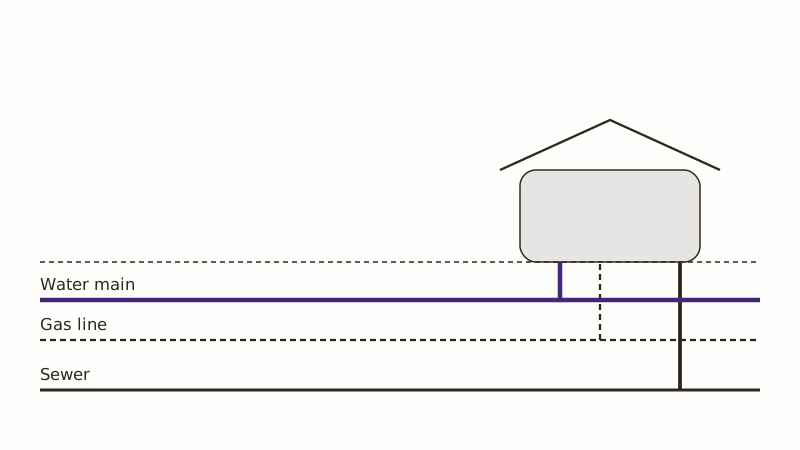
Do not assume one plan fits every lot. Ontario Ranch is a large newer community area, while lots near downtown and the Euclid Avenue area are a different setting. Utility connection fees and inspections are separate from the plumber's bid, so ask who pays them and when. A builder usually hires and manages the plumbing; if you are building yourself, ask the Building office what rules apply to you.
Who should I hire, and what do the rules say?
Hire a contractor with a California license. Work of $1,000 or more, or anything permitted, falls under the state's license rule, and new-house plumbing is both. Check the number on the contractor board's website, read customer reviews on more than one site, and ask for permit, inspection and warranty terms in writing.
If a builder is handling it, ask which plumbing company is doing the work, what is included, and who is responsible for inspections and callbacks. A written contract is required for home improvement work at $500 and up, and deposits are limited, so a large advance is a warning sign. Collect two or more bids with identical scope and compare them line by line, water heater and gas lines included.
How do I compare plumbing bids for a new build?
Put the bids in a table: rough-in, finish, fixture allowance, gas piping, water heater, permit and inspection fees, schedule, and payment steps. A bid far under the others has usually dropped something, often the finish stage or the water heater. Ask how plan changes and extra work are priced.
Check the maintenance side too: who handles a leak found after move-in, and for how long. Ask whether pipe material and brand are named, since PEX, copper and PVC differ. Hourly plumber rates help with change orders, and PEX versus copper explains the pipe choice. To collect bids, ask for quotes; the price reaches you in writing first.
Common questions
Does the quote include fixtures like toilets and faucets?
Not necessarily. Plenty of rough-in bids cover pipes only, with fixtures bought separately or carried as an allowance. Request the fixture list in writing, naming who buys the toilets, faucets and kitchen sink and who sets them. Finish work may be its own line.
Is gas piping part of new-house plumbing?
Often, because one contractor frequently runs gas to the range, dryer, furnace and water heater. Gas work needs a permit, an inspection and a contractor with a license. Make sure it is in the bid; gas line pricing covers the topic.
Can I save money by supplying my own fixtures?
Sometimes, but check first. A plumber may charge to install fixtures they did not supply, and may not stand behind them. Make sure the fixture fits the rough-in, and that the plumber approves it before you buy. The savings are real only if nothing has to be changed later.
When should the plumber be booked?
Early, before framing, since rough-in happens when the walls are open and drain lines go in before the slab. Bring plans so the plumber can count fixtures and spot clashes. Late changes after rough-in cost more, so settle the layout, water heater location and gas needs first.
Where do maintenance and customer reviews come in?
After move-in, a leak or a clogged drain is a maintenance call. Keep the contractor's name, the permit number and the pipe material. Customer reviews help when choosing, but check that they describe jobs like yours. For a service area check, see our service areas page.