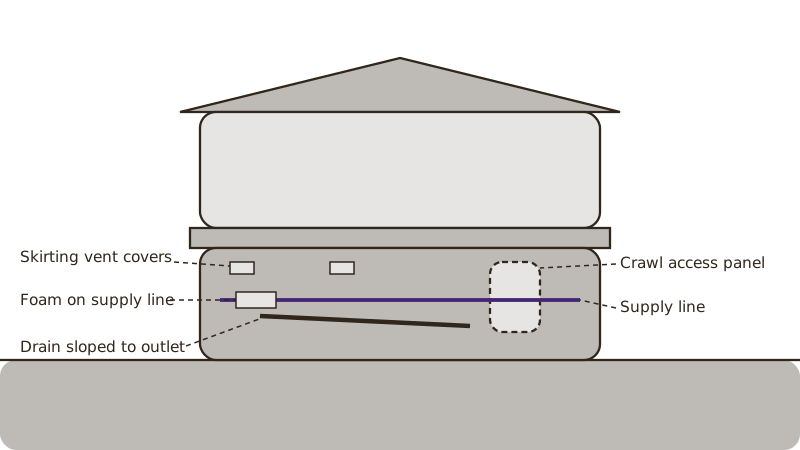
A cold snap can reach Ontario even in a mild winter, and a manufactured home feels it first, because its supply lines often run in the open belly under the floor rather than inside warm walls. A few hours in autumn is cheaper than a burst line in January. This page is a checklist for owners, with the limits spelled out. Everything else we do is listed on the Chaffey Pipe and Drain home page.
What does it mean to winterize mobile home plumbing here?
It means making sure supply lines, drain runs and the heater can ride out a freezing night without splitting. In a home that stays occupied that mostly means insulation, sealed skirting and a plan for cold snaps. For a home that sits empty, it can mean draining the system. Keep an eye on National Weather Service freeze warnings to know when it counts.
Why are mobile homes riskier? Pipes sit below the floor, in a space that is only as warm as the skirting keeps it. Supply lines are often flexible plastic, which tolerates some freezing better than rigid pipe but can still fail at fittings. Drain lines are thin and sag over time, so they hold water that can freeze.
We haven't verified local freeze statistics for this page, so treat the timing as your call. The point is to be ready before the cold arrives, not to guess the date.
How do you protect the pipes under the home?
Start with the skirting. Close any gaps, put vent covers on in cold weather and make sure the crawl access panel seals shut. Then wrap exposed lines with foam sleeves, and add heat tape only when its label matches your pipe type and you follow the maker's directions, because a bad tape job is a fire risk.
Look for the places where pipes come up through the floor at fixtures. Cabinet doors under sinks that sit against exterior walls can be left open on a freezing night to let warm air reach the lines. Disconnect and drain garden hoses, and cover outdoor faucets and the pressure regulator at the supply connection.
Find the main shutoff now, and walk every adult in the house to it. If a line does split, shutting the water off fast is the whole game. A bucket and a flashlight under the home, kept somewhere you can find them, make the first five minutes less stressful.
Where is the plumbing vent, and what should you check on it?
The vent is the pipe through the roof that lets drains breathe. A vent that is clogged or capped solid leaves sinks gurgling and slow. Check it from the ground or a safe ladder position: look for a missing cap, a bird nest or debris, and cracks around the base. Never close the opening with a solid cover.
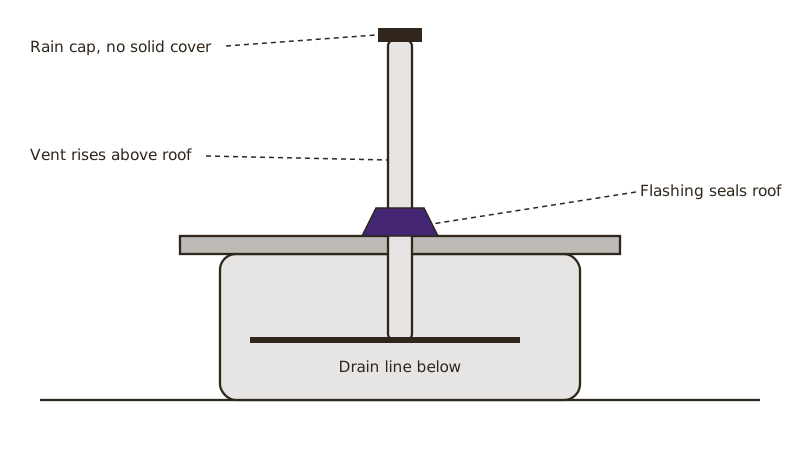
Replacing or resealing the roof flashing around a vent is roof work and it's easy to get wrong. If leaks show up on a ceiling near a vent, that's a roof and plumbing question both. A plumber can inspect the vent system; the flashing may need a roofer.
If you want a schematic, there's usually a plumbing layout in the home's paperwork, and many manufacturers keep copies. The layout shows where supply, drain and vent lines run, which makes repair quotes more accurate. Take a photo of it and keep it with the home's records.
What should a mobile home inspection and repair look at?
Expect a look at the heater, the shutoffs, the belly lines, drain slope and where the home ties into the lot or park connection. Check for staining, soft spots near the tub, and the smell of wet insulation. Repairs and replacements follow the same rule: whatever the plumber finds, ask for it in writing with photos.
For a fuller rundown of a visit, read about inspecting mobile home plumbing. If you're worried about pipes bursting, learn how to spot a burst pipe and burst pipe prevention.
Plumbing and the water heater go together. When hot water falters on a cold morning, it's worth reading about water heater repair before you decide anything. A sudden drop in pressure or wet ground under the home can also signal a leak.
What gas and permit rules apply to a manufactured home?
Gas piping is not a DIY job. SoCalGas delivers the gas in this area. A rotten-egg smell means you walk out, then call its emergency number, 1-800-427-2200, when you're clear of the building. If anyone is in danger, dial 911 instead of waiting. Repairs to gas lines, appliances and connections must be done by a qualified contractor, and often need a permit and inspection.
Permits for a manufactured home work differently from a site-built house. The state's housing department (HCD) says permits are required to make alterations to a manufactured home. Its Codes and Standards line is (800) 952-8356, and plumbing changes can fall under that rule. We recommend you call before replacing or rerouting any piping.
Once a job hits $1,000 across labor and parts, California wants a contractor license on it, so a larger repair or a re-pipe is for a contractor, and cosmetic or small repairs sit below that line. If you're unsure which side your job falls on, ask the plumber to say so in the written quote. Our gas line page explains more.
What does maintenance plumbing cover, and how often do pipes need cleaning?
On a maintenance visit the plumber tests shutoffs, fixtures and drains, inspects the heater and supply lines, hunts for leaks and reports what needs work. There is no official schedule for cleaning house pipes. Clean when drains slow or smell, and ask about drain care sooner for kitchen lines that take grease.
Book a pre-winter maintenance check if the home has some age on it or has leaked before. Ask each visit to list what was checked and what was not, in writing. When you hire anyone, read customer reviews on independent sites and ask for the scope in plain terms. We don't publish reviews on this page.
For small clogs between visits, kitchen sink drain remedies from the pantry make a fair first step. For the wider picture of plumbing work we arrange, see plumber services in Ontario.
Common questions
How long does preparation run?
Insulating exposed lines, sealing skirting and checking the shutoff takes a few hours for most owners. Draining the whole system for a vacant home takes longer, and refilling it needs care to avoid leaks. A plumber can do it all in one visit if you describe the home and the problem when you book.
Is it worth hiring a plumber for this?
It's worth it when you can't reach the pipes under the home, you find old or damaged lines, or the water heater and gas need attention. Pipe wrap and skirting repair you can do yourself. Have the quote itemize its scope so you don't pay twice for work you already finished.
Should I stay in for the plumber's visit?
Yes. A person needs to unlock gates, show where the shutoff sits and sign off on the scope. In a park, let the office know a plumber is coming. Clear the area under the home and around the water heater so the work goes faster.
Is heat tape a DIY job?
Only where the product's label covers your pipe material and you follow the maker's instructions line by line. Never overlap the tape or cover it with insulation that isn't approved for it. If anything looks scorched or damaged, stop using it. A plumber or electrician can check the installation.
Where can I find my mobile home's plumbing layout?
Dig through the papers that came with the home, find the data plate (often in a cabinet or closet) or call the dealer or maker. A plumber can also sketch the lines after an inspection. Either way, a layout makes a quote more accurate.