Start by cutting the power, then diagnose the clog. A disposal that hums while the blades refuse to turn is jammed. One that spins freely while the sink slowly fills with gray water has a blockage after the grinder, somewhere in the trap or drain line. Hands stay out of the opening. Both cases are below, and drain cleaning and clogs shows the wider picture.
How can I tell a jammed grinder from a blocked drain line?
Flip the switch for a second and listen. Humming with no rotation says the grinder is jammed. A normal whirr plus standing water says the problem lies downstream, in the trap, the drain line or a double-sink connection. Silence suggests the reset button tripped or power is missing altogether.
Small clues narrow it down. Water rising in the second bowl while the first one drains points at the line. Dishwasher water spilling into the sink, or a dishwasher stuck full, points at the hookup beside the disposal. A foul smell plus slow draining usually means grease and food film coating the pipe.
Before anything else, unplug the unit under the sink, or switch off its breaker if it is hardwired, and confirm the wall switch does nothing. A wall switch in the off position is not a safe disconnect on its own.
How do I free jammed blades without getting hurt?
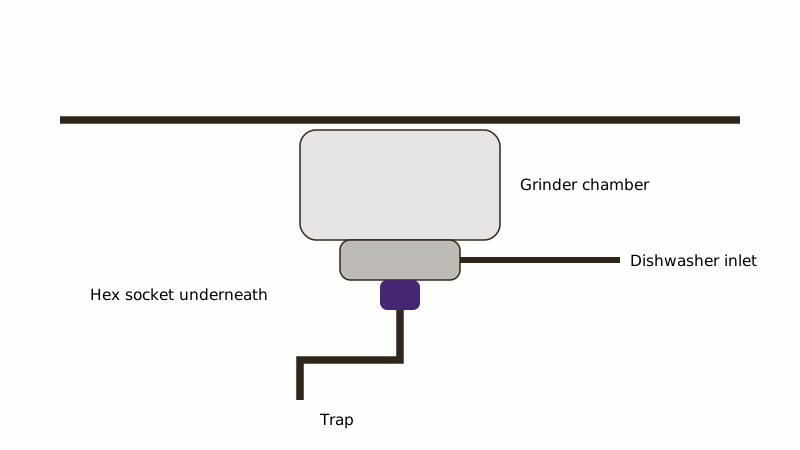
With power disconnected, light up the opening and lift out whatever is stuck with tongs or pliers. Then slide a hex wrench into the socket underneath and swing it side to side until the flywheel turns freely. Press the red reset button, bring power back and test with the tap running.
On most models the hex socket is dead center underneath. A key often comes in the box, and hardware stores sell them. Lacking one, a broom handle pressed against a blade through the opening can sometimes nudge it loose, but only with the unit unplugged.
Usual suspects: bones, peach pits, bottle caps, a dropped spoon, stringy stems. Once the flywheel spins, run cold water and grind a handful of ice cubes to scrape residue off the chamber walls.
If the reset pops again immediately, stop there. A disposal that keeps tripping may have a failing motor.
How do I clear a blockage past the grinder?
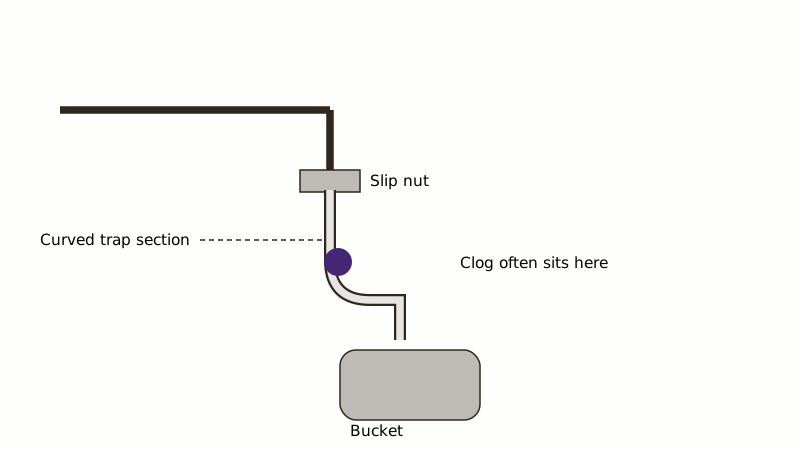
Park a bucket under the trap, back off the slip nuts, drop the curved section and rinse it out. Inspect the run from the disposal outlet to the wall for sludge, then rebuild with the washers in place and test with running water. Food clogs mostly collect in the trap or right after it.
Reach for the plunger before dismantling anything. Run a few inches of water into the sink, plug the other bowl or the dishwasher line with a damp rag and push firmly with a cup plunger. Steady strokes can move a soft clog. Keep the disposal unplugged, and never plunge with a chemical cleaner standing in the drain.
Hot water with dish soap helps break down grease. A fizz of baking soda and vinegar freshens the drain and loosens light film, but it cannot move a solid blockage and does nothing for a jam.
A clear trap with water still backing up puts the clog further along the line, which is work for a plumber's drain machine. Drain clogged kitchen sink and kitchen sink draining very slowly go through those cases.
Could the dishwasher hookup be what is clogging it?
Yes. The dishwasher drains through the disposal, and a new disposal comes with a thin plastic plug in the dishwasher inlet that someone has to punch out. If it is still in place, or food has packed the hose connection, dishwasher water backs up. Inspect the short hose at the disposal's flank and clear it.
After clearing the disposal, run the dishwasher through a drain cycle. If water now surfaces in the sink, the connection or the air gap is blocked. An air gap, the small cylinder beside some faucets, can clog with debris and opens easily for rinsing.
Which shortcuts make a clogged disposal worse?
Do not reach in by hand, powered or not, because blade edges cut. Never pour drain cleaner into a jammed disposal; it pools in the chamber, can harm seals and can splash back during your repair. And never mix products.
The Liquid-Plumr FAQ warns against combining its product with ammonia, toilet bowl cleaners or other clog removers, since that can splash or release hazardous gases, and it does not recommend plunging with the product in the drain. That is one brand's guidance, so follow your own label and skip chemicals if you plan to open the pipe.
Avoid pouring hot grease down the sink or grinding with the tap off. Let cold water run for several seconds before, during and after grinding so waste travels down the pipe instead of settling.
How do I stop it clogging again?
Use plenty of cold water, feed the disposal small portions and keep fibrous and starchy items out. Skip grease, heavy coffee grounds, eggshells, pasta, rice, potato peels, celery and corn husks. Grind ice or citrus peel now and then, and scrape plates before rinsing.
Water quality plays a part. Ontario's 2025 water report puts hardness anywhere from 91 to 177 ppm on average, depending on source, and scale narrows pipes slowly. In an older house where clogs keep returning, a rough or partly blocked pipe may be to blame; home remedies for sink clogs covers the older tricks.
Think about the unit's age as well. A disposal that jams often, leaks from the bottom or trips its reset again and again may be worn out. Disposal installation and disposal repair cover replacing or fixing one.
When is a clogged disposal a plumber's job?
Ring a plumber when the flywheel stays frozen after the hex wrench step, the reset keeps tripping, water seeps from the body, a clear trap still leaves the sink backing up, or drains elsewhere run slow. Several slow drains at once suggest a main line issue.
Typical sink clog pricing is explained in unclogging a sink: what it costs. For a local plumber to take it on, fill in the quote page at Chaffey Pipe and Drain, and have the price confirmed in writing beforehand.
Common questions
What does humming without spinning mean?
The blades are stuck. Disconnect power, pull the object out with tongs and turn the flywheel from below with a hex wrench. Hit the reset button and test. A hum that returns suggests a failing motor or something still lodged, which is worth a plumber's attention.
Do baking soda and vinegar actually work here?
They freshen a drain and loosen thin film, though a jam or solid clog stays put. Treat it as maintenance, not repair. Rinse with hot water afterward and never combine it with commercial cleaners. For true blockages use a plunger, the trap or a plumber.
Can I plunge a sink that has a disposal?
Yes, with the unit unplugged and no chemicals sitting in the drain. Seal the other bowl or the dishwasher line with a damp cloth so pressure reaches the clog, keep some water in the sink and use a cup plunger. If you used a cleaner recently, read its label first.
How long should clearing it take?
A jam can often be cleared fairly quickly with a hex wrench, and cleaning the trap adds a bit more. Clogs deeper in the line, a blocked dishwasher connection or a dying disposal take longer, and those are where a plumber's equipment pays off.
Why does the sink fill whenever the dishwasher runs?
Dishwasher water exits through the disposal, so a blocked outlet, a packed hose connection or a plug left in the inlet pushes it up into the sink. Clear the disposal and trap, look for a leftover plug in a new unit, and rinse the air gap if your sink has one.