A kitchen sink clogs because grease cooled and coated the pipe, because food scraps packed the trap, or because a disposal or dishwasher drain jammed. Where the water stands tells you which. This page sits under the larger guide to clogged drains and toilets, and it deals with the kitchen specifically.
Look first at what else is affected. One basin full while the other is empty suggests a plug in that side's tailpiece. Both sides full, with the dishwasher gurgling, points to the shared line behind the wall.
What is clogging my kitchen drain in the first place?
Four things account for most kitchen clogs: cooled cooking grease that lines the pipe, food scraps packed into the trap, coffee grounds and starchy waste such as rice or pasta, and a jammed garbage disposal. Grease is the quiet one, because it builds up over months and then holds everything else in place.
Fats poured down the sink harden as they cool and snag whatever follows. So a line that crawled for weeks can quit entirely after one big dinner. Disposals help with soft scraps but do not make fibrous or starchy waste safe: celery, potato peels and rice swell in the pipe. Dishwashers drain into the same line, often through the disposal, so a blocked dishwasher hose or air gap can look like a sink problem. If you have a disposal, the guide on freeing a jammed disposal drain comes first.
What is worth trying with the pipes still assembled?
Plunge first, with a rag blocking the second basin. With a disposal installed, run it for a second to learn whether it holds the jam. Leave chemicals out of it. A sink that is merely slow may respond to a hot-water and dish-soap soak that loosens fat.
For the usual DIY toolkit, the companion page, household fixes for a blocked sink drain, covers plunger, baking soda and trap in detail, so those steps are not repeated here. The one kitchen-specific caution is the dishwasher: do not run it while the sink holds water, since the drain backs up into the machine.
What does opening up a double-basin kitchen drain involve?
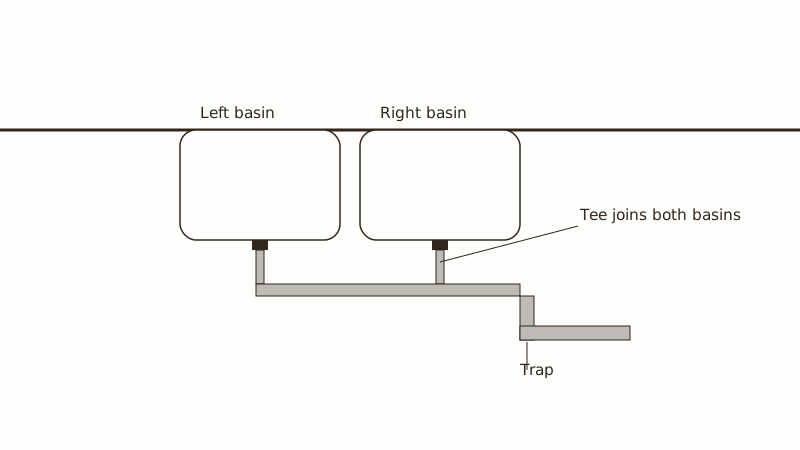
Bucket first, then unscrew the slip nuts at the trap and tailpiece and let it empty. Scrub the trap, inspect the horizontal arm heading into the wall, and test with water. With two basins, both tailpieces join at a tee ahead of the trap, so check each one. Tighten by hand and check each joint for seepage.
A clear trap with water still standing calls for a hand snake into the wall pipe. Many kitchen clogs sit right past the trap, where the pipe turns downward. Disposals have a baffle that catches debris; detach one from the drain only if you can manage its weight and wiring, with the power switched off. Water surfacing in a different fixture while this sink empties means the main line is blocked, which is a plumber's job rather than a kitchen snake's.
Is it the sink, the main line or something deeper?
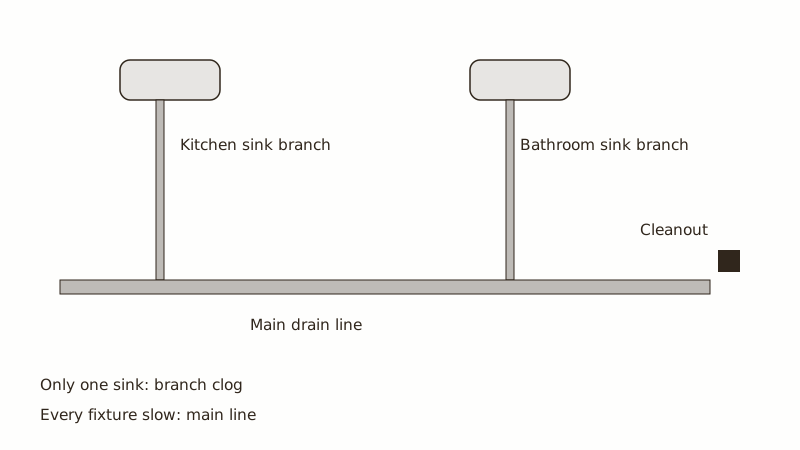
When only the kitchen suffers, the clog is in the branch serving the sink. A bathroom or floor drain that slows or bubbles too indicates the larger line, which needs a plumber's equipment. Toilets that gurgle as the sink empties are another main-line sign.
Older homes carry more risk. Near downtown Ontario and the Euclid Avenue historic district, drain lines can be cast iron or old clay that roughen over decades, and grease adheres to rough walls. Postwar homes in Montclair and Chino can have roots entering the outside lateral. For slow flow without a complete stop, Slow-but-not-stopped sinks get their own treatment in the slow-drain explainer and a kitchen sink that barely moves. Who owns the sewer line depends on your property; the City of Ontario's Municipal Utilities Company at (909) 395-2600 handles the city system, and you should ask which part of the line is yours.
What habits stop the next clog?
Wipe pans into the trash before washing, scrape plates into a bin, fit a basket strainer, and rinse greasy loads through with plenty of water. Feed the disposal small amounts under cold running water. Fats, coffee grounds, eggshells and stringy scraps belong in the bin.
Cold water keeps fats solid so the disposal chops them into small bits, while hot water melts grease that sets again farther down. Once a month, a warm rinse with a little dish soap helps prevent film. Scale in older pipe also snags grease, and Ontario's 2025 water quality figures list hardness averaging 91 to 177 ppm depending on the source. If a disposal is aging or undersized, what a disposal installation involves shows how replacement works.
Where does DIY stop?
Stop when both basins stay full after plunging, the dishwasher spills into the sink, other fixtures gurgle, a snake will not get past the trap arm, or the blockage returns inside a week. A plumber can cable or jet the line and put a camera in to find the cause.
Mention any chemical cleaner you poured. Whoever opens the trap is exposed to it. For the disposal side, disposal repair help covers jams and failures. A visit starts on the quote form, and the pricing drivers appear in the cost of unclogging a sink. Elsewhere, the home page shows the full range of jobs.
Common questions
Does plunging do anything for a kitchen sink?
Frequently, if the clog is soft grease or food near the trap. Seal the other basin, keep some water in the sink and pump firmly. After several rounds with no movement, the blockage is deeper and plunging just shifts water around. Skip the plunger if chemical cleaner is sitting in the sink, since it can splash.
What should the visit include?
Clarify whether only the sink branch or the main line gets cleared, whether a camera view comes with it, and the follow-up if it blocks again. Settle the price beforehand. Contractor license rules in California cover permit jobs and anything reaching $1,000.
Is someone needed on site?
Yes, so an adult can point out the sink, confirm where water backs up and look over the result. Clear the cabinet underneath so the trap is easy to reach. When several fixtures are affected, say so while booking, so suitable equipment arrives.