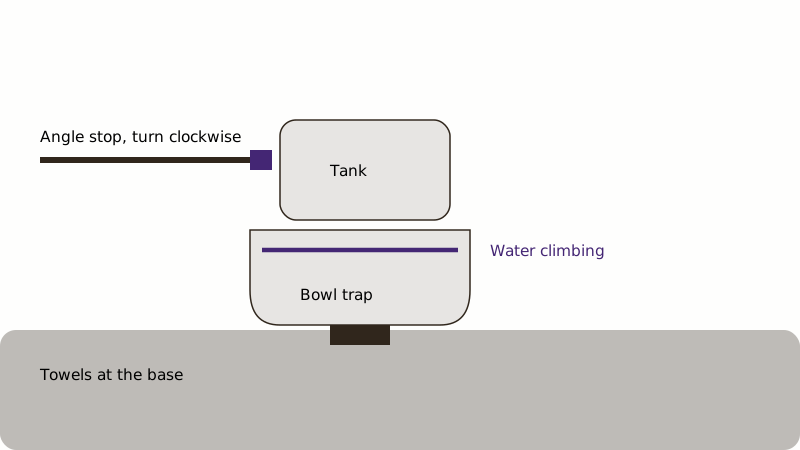
Hold off on a second flush; repeat flushing is how bathroom floors end up underwater. Lift the tank lid, drop the flapper into its seat or shut the supply valve by the floor, and fetch a flange plunger. Most blockages are paper and waste that a few firm plunges push along. If that fails, a toilet auger is the next tool. Bigger backup patterns belong to drain cleaning and clogs.
What comes first when the water is climbing?
Starve the tank of water. Reach in and press the flapper down so refilling halts, or twist the angle stop behind the bowl clockwise. Spread towels around the base. The tank holds more water than a full bowl can take, so another flush only makes things worse.
A bowl near the rim often settles by itself after several minutes. Pull on rubber gloves. If you need room to plunge, scoop some water out into a bucket. Crack a window and shut the door on curious kids and pets.
Decide whether you have a clog or merely a weak flush. A sluggish flush with a full tank can come from clogged rim jets or a tank fault rather than a blocked drain, and that case lives on the toilet flush repair page.
What is the right plunging technique for a toilet?
Choose a flange plunger, meaning a cup with a soft rubber sleeve that folds out underneath, so it seals the outlet. Water should cover the cup. Push the first stroke gently to expel air, then plunge firmly and steadily for fifteen to twenty seconds, finishing with a sharp pull. Watch whether the level drops.
Flat cup plungers suit sinks better. The flange type matches the toilet's curved outlet. Keep the shaft vertical so the seal holds and water stays in the bowl. Several rounds are normal, since a clog tends to move in stages.
Once the water drains, flush one time as a test. If the bowl rises again, stop and plunge more. Flushing over and over just loads a blocked bowl.
Dish soap helps too. Add a generous squirt and some hot tap water, and wait roughly fifteen minutes. Soap lubricates the clog and warmth softens it. Hot, not boiling: boiling water can crack porcelain. Pouring from waist height adds a little force.
Which tool is next if plunging fails?
Reach for a toilet auger, sold as well under the name closet auger: a short cable inside a curved guard that shields the porcelain. Ease the tip into the outlet, turn the crank with light forward pressure, snag or break the obstruction, pull the cable back and flush. Rinse and wipe it clean afterward.
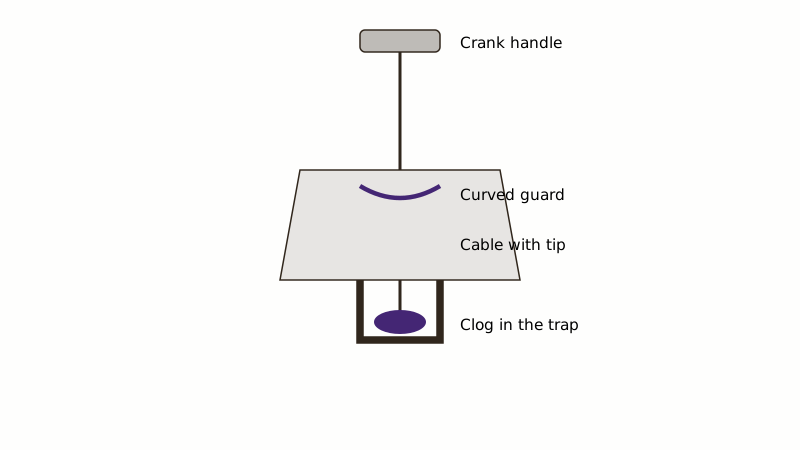
Hardware stores carry basic models at modest prices. A bent coat hanger is a poor substitute, since it scratches porcelain and may push the clog deeper. Go slowly, and if the auger meets something firm that will not shift, suspect a solid object, perhaps a toy.
If an object is the cause, stop flushing. A plumber can retrieve it with a closet auger, or by removing the toilet from the floor if that is what it takes. If lifting reveals a leak at the base, toilet leak help is relevant.
Is chemical drain opener safe for a toilet?
Chemical openers are formulated for sink and tub drains. Liquid-Plumr's FAQ says its products are not designed to remove the waste that may be clogging a toilet, warns that mixing with ammonia, toilet bowl cleaners or other clog removers can splash or release hazardous gases, and does not recommend plunging while its product is in the drain.
The plunging point matters. Pour a cleaner in and then plunge, and the liquid can spatter your skin and eyes. A bowl holding a chemical is also unsafe to work on and harder for a plumber to service. Skip chemicals, start with the plunger and use an auger for whatever remains.
Already poured something in? Leave the plunger alone, wear gloves plus eye protection, ventilate the room, and tell the plumber exactly which product it was.
What usually causes the blockage?
The usual culprits: too much toilet paper, flushed wipes, paper towels, feminine products, cotton swabs, floss and toys. Low-flow toilets move less water per flush, so waste and paper need to be modest. A WaterSense toilet uses 1.28 gallons or less each flush, versus as much as 6 for some old models.
Wipes sold as flushable frequently fail to disintegrate the way toilet paper does, which makes them a regular cause of blocked drains. If one toilet keeps blocking, look at the flush strength, rim jets caked with scale, and whether the line beyond the toilet is partly blocked.
Water hardness plays a part. Ontario's 2025 report puts averages between 91 and 177 ppm depending on source, and scale can clog rim jets and weaken a flush over time. White crust under the rim is a clue, and toilet flush repair explains cleaning it.
What shows that the blockage lies beyond the toilet?
Check the other fixtures. If the tub or shower gurgles when you flush, the toilet bubbles when other drains run, or more than one toilet is blocked, the obstruction is lodged in the main or building drain. Plunging a single toilet cannot fix that, and clearing it takes a plumber's drain machine.
More signs: water rising out of the lowest drain, a sewage smell, or a toilet that clears briefly and backs up again. Houses with clay or cast iron drains can have roots and scale narrowing the pipe, a pattern plausible in older areas around downtown Ontario and the Euclid Avenue district.
A bathroom sink that is slow alongside the toilet is also worth checking; clearing a bathroom sink handles the sink side.
At what point do I need a plumber?
Ring a plumber when the water keeps rising or spills over, the plunger and auger both fail, several drains run slow, you smell sewage or something is lodged inside. Sewage coming up in the house needs prompt attention, and emergency plumber help explains what counts.
Pricing for the visit is discussed in the cost of unclogging a toilet. To have a local plumber inspect the toilet, use the quote page at Chaffey Pipe and Drain, and request the price in writing.
Common questions
Does hot water help?
Warm tap water and some dish soap can soften and lubricate a clog; boiling water could crack the bowl. Give it a few minutes, then plunge. If the bowl is already near the brim, let the level fall before adding any water.
How many rounds of plunging are enough?
Aim for several rounds of fifteen to twenty seconds, resting between them. No progress after five or six rounds means switching to a toilet auger. Stubborn blockages, repeat blocking or other fixtures backing up are cues to call a plumber instead of continuing.
The water is draining now. Can I flush?
Wait a moment. Plunge once or twice more after the level falls, then flush a single time. If the bowl rises, stop. Repeated flushing floods the floor. If it drains and refills normally, a second flush confirms the clog is gone.
Might it clear by itself if I leave it?
Sometimes a paper clog softens and drains after an hour or two, especially with dish soap and warm water. Do not rely on it. Wipes, toys or a deeper drain problem will not clear alone, and repeated clogs mean you should find the cause.
Do baking soda and vinegar do anything?
They may freshen a bowl or loosen scale under the rim, but they will not reliably clear a real blockage, so use the plunger and auger first. Never combine them with commercial cleaners; mixing products can release gas or splash.