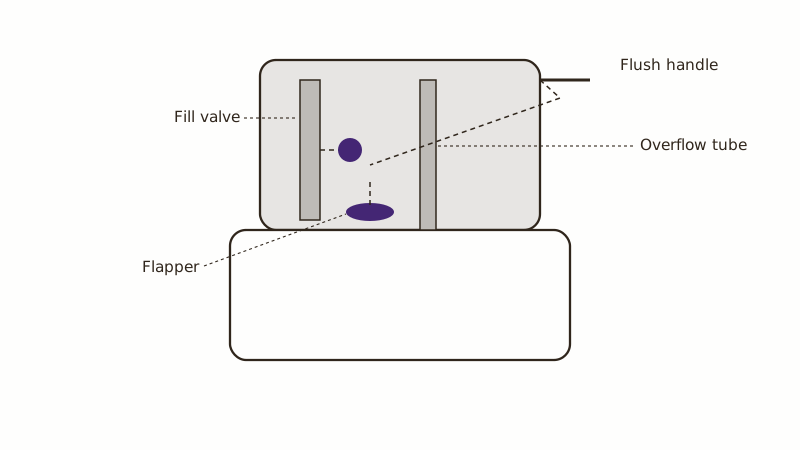
Lift the lid, press the handle once, and watch what moves inside; the tank shows its own fault. A limp handle, a chain drooping into a loop, a rubber flapper that closes too soon, a water line set too low, or a cracked valve body: five different faults with five different cures. Under our toilet repair hub, this page goes through them the way a working plumber would, cheapest check first, and flags where toilet repair stops being a weekend project.
Why is my flush weak, or missing altogether?
A thin flush means the tank is not dumping enough water fast enough. Hold the water line up to the fill mark molded into the tank, then see if the flapper rises fully and hangs there. An early-dropping flapper, a low waterline or scale in the rim holes all shorten the swirl.
Handle moves but nothing inside rises? The arm or its link has come off. Flapper pops up then slams shut? The chain is too long and gets sucked under it, or the arm is catching on something. A bowl that fills and then drains slowly is another story, because that is a blockage; see a clogged toilet for the plunger route.
How do I put a loose handle right?
Look at the arm and chain from above. A handle that turns without lifting often has a slack mounting nut behind the tank wall; most are reverse-threaded, so counterclockwise snugs it. If the chain slipped off the arm, hook it back on with a touch of play so the flapper lies flat.
Replacing a cracked handle or bent arm is cheap and a kit goes on in minutes. Shorten the chain until it lifts the flapper but cannot loop beneath it. Further steps: toilet handle loose and will not flush.
What if the trouble is down at the drain?
Down at the tank floor sits the flush valve, a round drain sealed by a rubber flapper. Rubber ages, softens and warps; then it seeps into the bowl and the tank keeps refilling. Fitting a new flapper is the cheapest fix there is. A pitted seat or a cracked valve body means swapping the whole valve.
For a flapper: close the supply, flush to empty the tank, unclip the worn part and clip on a twin. A whole valve is bigger work because the tank lifts off, though some models allow a shortcut, shown in replacing a toilet flush valve without removing the tank. The flapper by itself has a page too: toilet flapper repair.
When is the repair beyond a homeowner?
Ring a plumber if a new part will not seat, water seeps round the base, the porcelain is cracked, the bowl keeps clogging, or the shutoff will not turn. One who also handles drainage services can inspect the line behind the fixture, which a tank repair never reaches. Under state rules, work reaching $1,000 needs a contractor who holds a California license.
Parts for most flush fixes are cheap, so a visit buys speed and a correct diagnosis more than anything. In an older Ontario bathroom, corroded shutoff valves and brittle supply lines are common reasons a plumber replaces more than the one part you called about, and it is sensible to ask about them while the water is already off. If the toilet itself is past saving, replacing a toilet covers the pricing. For a damaged overflow tube, see repairing a toilet overflow tube.
To pass the job on, ask for quotes; a written price comes before anyone starts. Our home page has the other services.
Why is the tank still running after the flush?
Suspects: a leaky flapper, a fill valve that never fully seals, or a float high enough to spill water down the overflow tube. A dye test separates them. Put a little food coloring in the tank; EPA says color reaching the bowl within 10 minutes means a leak.
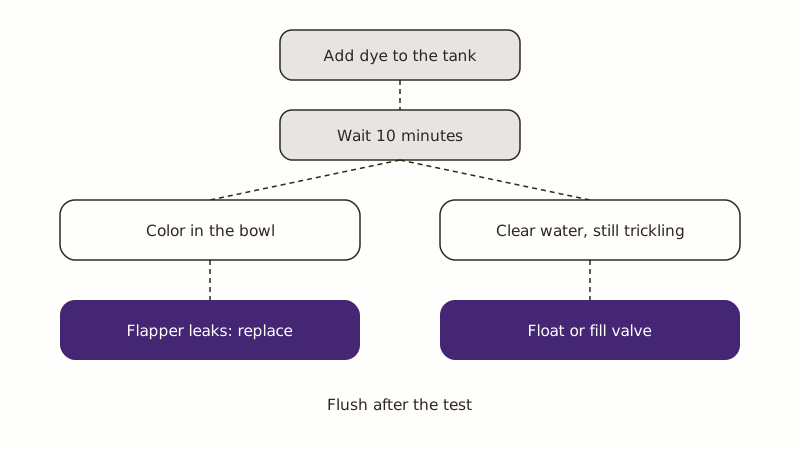
Flush when the test ends to avoid staining. Colored bowl water blames the flapper or seat. Clear water with the trickle still going blames the float or fill valve. Quiet leaks add up; EPA puts the typical household loss at more than 9,300 gallons yearly. Related repairs: a toilet that keeps running and fill valve repair.
Common questions
What is the time commitment?
A chain, handle or flapper swap is brief with the part in hand, a fill valve takes somewhat longer, and lifting the tank for a new valve takes longest. One look lets a plumber name the time, so ask when you get the quote.
What should the written price cover?
What the price includes, whether parts are in it, whether worn neighboring parts get replaced in the same visit, and the plan if the porcelain proves cracked. Check the license number on the state board's site and keep the figure in writing.
Is anyone needed at home?
Usually, at first, to open the door and describe the symptom. Clear the way to the toilet and shutoff, and note when the fault shows: mid-flush, just after, or overnight. Before the plumber leaves, flush repeatedly and look at the base.
Can a water heater or heating issue upset the toilet?
No, since a toilet uses cold water only. If heating of the household water fails and the toilet misbehaves, those are two repairs, although one visit can cover both. Mention the water heater when booking so it can be looked at while someone is already there.
Why does the tank hiss for a long time after refilling?
A long hiss with a full tank tends to mean the fill valve is not sealing, or the flapper leaks and the tank keeps topping up. Try the dye test. Water sitting high and spilling into the overflow tube calls for a lower float, while a persistent hiss calls for a new fill valve.