Code language is dense, and most homeowners never need to read it. What you do need is the outline: gas piping work gets a permit, the pipe has to be the right material and size, it is tested under pressure before use, and an inspector signs off. This page, part of the gas plumber guide, lays that outline out and flags the points to confirm with the city.
Where do the rules for house gas lines come from?
In this state the plumbing code, which contains the fuel gas chapter, sets the rules for gas piping in houses, along with whatever local amendments a city adds. Editions change on a state cycle, and cities can add rules, so the building department that issues your permit is the final source for what applies on your project.
Sources we read, mostly handouts from California building departments, agree on the broad strokes but differ on details such as section numbers and test criteria, since they track different code editions. We therefore describe the structure and avoid quoting section numbers. Ontario's Building office, (909) 395-2023, knows which edition and amendments are currently in force and whether a handout covers your type of job.
When does gas piping work need a permit?
Installing new gas piping, extending it, replacing it or repairing a section generally requires a permit from the city. The handouts we read say so plainly. Swapping an appliance onto an existing connector might be handled differently, so check with Building first. Anything permitted in California is meant for a contractor with a state license.
The application wants the scope of work, the appliances being served and the route the pipe will take. Inspection then happens at defined points. Skipping a permit puts you at odds with the code and can complicate insurance or resale. Typical jobs appear in gas line work around Ontario, and the cost side is in gas line cost factors.
What pipe materials are allowed?
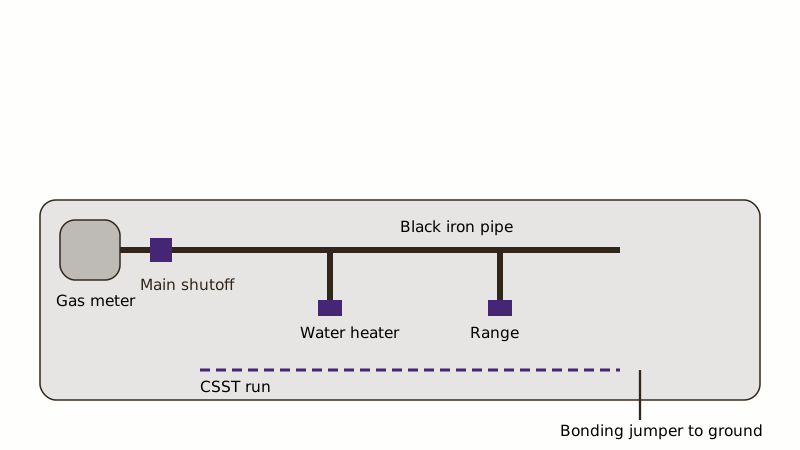
Black iron, meaning steel pipe, has been the standard for decades. Corrugated stainless steel tubing, CSST, is widely used because it threads through framing easily, and some jurisdictions permit copper tubing for gas under particular conditions. The handouts we read rule out cast iron for fuel gas. Flexible connectors are for the last stretch to an appliance, not for runs inside walls.
Which material fits depends on the job and on what the local office accepts. Plumbers usually choose by route and pressure. Each fitting has to match its pipe, and joints take a suitable compound. Where a line passes beneath a slab or through concrete, sleeving and venting rules may apply. If you are comparing a flexible gas line to rigid pipe, see a half-inch or one-inch flexible gas line for how size affects delivery.
How is the pipe sized?
By the gas the appliances burn per hour and the distance the pipe travels. Each appliance has a rating in BTUs per hour, the total demand is added up, and sizing tables in the code give the pipe diameter that will deliver that flow over the measured length. Long runs and heavy loads call for wider pipe, and CSST comes with its manufacturer's own tables.
Undersized pipe starves appliances when several run at once. Hooking a tankless heater, a range, a fire feature or a pool heater onto an existing line is the classic reason a resize comes up. Do not size or extend a gas line from guesswork. A contractor works out the numbers and the inspector reviews them. What matters is the load of the whole system, not only the new appliance.
What is the pressure test, and who inspects it?
Before gas flows, the line is charged with compressed air, or a gas such as nitrogen that will not burn, and watched for any pressure drop. Handouts we read typically describe 10 psi or higher, held fifteen minutes without visible loss, while the piping is still exposed for the inspector. Some jurisdictions state higher criteria, so ask Ontario Building.
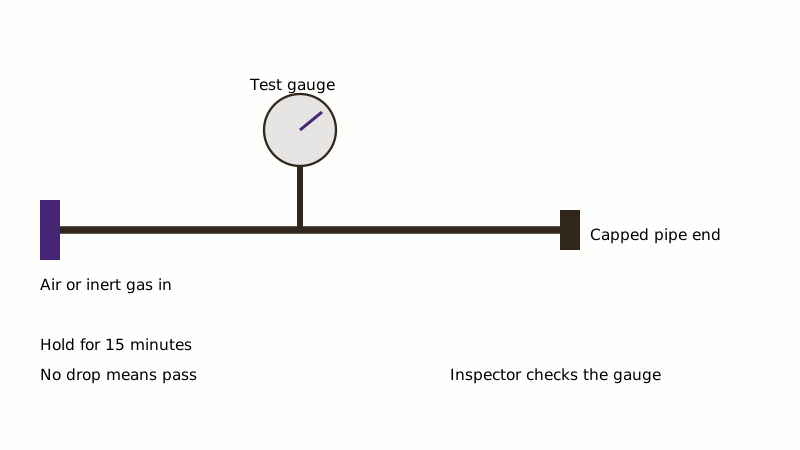
The first inspection usually happens before walls or trenches are closed, and a final comes when appliances are connected. The plumber calls for these, and you should expect them on the permit card. A passed test shows the pipe holds pressure, not that appliances are adjusted properly, so combustion and venting are separate matters. Ask the plumber what exactly the inspector will check on your job.
What is the bonding rule for CSST?
Corrugated stainless tubing has to be tied electrically to the home's grounding system, which reduces damage if lightning or a power surge energizes the gas piping. The handouts we read describe a bonding jumper connected to the grounding electrode system, installed to the code's standard, and the sizing of that conductor ties to electrical rules.
Installing CSST also requires following the manufacturer's instructions, and the handouts we read call for a qualified installer. If your house has CSST, ask a contractor or the inspector whether it has been bonded. It is a safety item and a job for professionals, because it touches both gas and electrical work. Ontario Building can say how it handles bonding verification.
What shutoffs and safety devices does a home need?
Each gas appliance should have its own accessible shutoff valve, and the whole house has a main at the meter. Seismic shutoff valves, which close on strong ground motion, are an optional or locally required addition depending on the city and the situation, so ask. Smoke and carbon monoxide alarms matter for any gas appliance. After an earthquake, do not relight a shut-off meter yourself.
For the earthquake side, see automatic gas shutoff valves and installing a seismic valve. A gas smell at any hour means going outdoors first. The utility's emergency line, 1-800-427-2200, appears on the City of Montclair's list; use 911 when danger is evident. SoCalGas serves Ontario and neighboring cities.
How does backflow testing connect to gas piping rules?
It does not. Backflow prevention protects the water supply and is handled by the water supplier's cross-connection program, with its own annual inspection and testing of assemblies. Gas piping answers to the plumbing code and the city's permit inspection. Both are plumbing-related and are sometimes handled by the same contractor, but they follow separate rules and schedules.
If you received a notice about a backflow device, read it from the water supplier and see backflow prevention testing. For general plumbing inspections, such as before buying a house, see plumber inspection costs. A sale inspection looks at gas piping visually but does not replace a permit inspection for new work. Outdoor appliances like tankless units are discussed in outdoor tankless installation.
Common questions
How quickly does permitting and inspection move?
It depends on the city's workload and the job. A small extension may be permitted and inspected within days, while a larger project takes longer. Building counters in Ontario have set hours and closures, so call (909) 395-2023 for current practice. We do not promise dates; the plumber will give an estimate once the scope is known.
What should I put to a gas contractor up front?
Learn who handles the permit, what pipe or tubing is planned, how it is sized, how CSST would be bonded, when inspections fall and who patches walls. Look at the contractor's page on the state license board, since permit work needs a contractor license, and remember deposits on home improvement are limited in California.
Must an adult be home during work and inspection?
Yes. Gas goes off for stretches of the job, and the inspector needs to see the piping and sometimes the appliances. An adult should approve the scope, admit the inspector and hear the instructions for relighting appliances. Do not relight or restore gas yourself if the plumber says to wait for the inspection.
Can I plumb gas to the patio myself?
In California, fresh gas piping comes with a permit requirement, and an error can mean a leak or fire. The sounder route is a hired contractor who obtains the permit, sizes the pipe and books the inspection. You can plan the location and clear the path. Do not use flexible connectors outdoors beyond their intended use, and do not bury unprotected pipe.