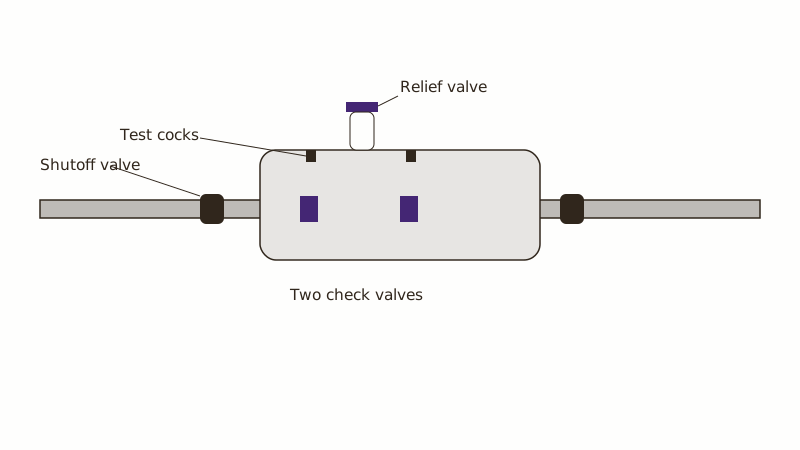
When a one-way device sits on your water line, the test proves it still stops water from creeping backward toward the public supply. A trained tester connects a gauge to the device, runs a short sequence of pressure readings, and records pass or fail. Your water provider usually sets how often, and most devices are tested yearly. This sits beside our pages on plumbing and gas jobs around Ontario.
Owners of lawn irrigation, fire sprinklers, pool fills or commercial buildings probably have a device. An ordinary house with no sprinklers has nothing to test.
What is backflow, and why does it need testing?
Backflow is water moving in the wrong direction through your pipes, usually because pressure in the main drops or pressure on your side rises. Fertilizer, dirty water or irrigation runoff can then be drawn into drinking water pipes. A backflow device blocks that path, and a test shows whether its springs, seals and check valves still do their job.
Springs weaken, debris jams seats, and rubber hardens, so a device that worked last year may leak this year. Hence the regular test, rather than a one-time install. What is being protected is shared drinking water, so a failed device on one lot is a risk to the neighbors too.
Which properties have a backflow device?
Properties with irrigation, fire sprinkler systems, pools, commercial kitchens, car washes, medical buildings and multi-unit buildings commonly carry one. Homes with a sprinkler system often have a pressure vacuum breaker or double check valve on the irrigation branch. Hose bibs have small vacuum breakers built into the spigot.
Ontario Ranch brings its own case. Ordinance 2689 requires new development in Ontario Ranch to connect to recycled water, and where a property has both potable and recycled water, keeping the two lines separate is a safety issue that water providers watch closely. Check your own address with the water provider rather than assuming. Larger commercial users face broader requirements, which testing for commercial properties describes.
Who asks for the test in this area?
The water provider does. Ontario Municipal Utilities Company serves the City of Ontario and can be reached at (909) 395-2600. Monte Vista Water District serves Montclair and portions of Chino, and the City of Chino and the City of Chino Hills run their own systems. Jurupa Community Services District covers Eastvale and part of Jurupa Valley. The water bill names whichever provider applies to you.
Each provider has its own notice and form. The usual sequence: a notice arrives saying a test is due, you hire a tester the provider accepts, and the result goes to the provider. Failure means repair, then a second test. Rules differ between providers, so call yours and keep the last report on file. The tester's procedure is in the backflow test procedure, and the wider picture is in backflow prevention testing.
What happens on test day?
The tester shuts off water to the device briefly, attaches test gauges to its test cocks, and runs readings that put each check valve, then the relief valve, through its paces. The visit is brief. A failed part is explained on the spot, and repair and retest follow. A written report comes to you, and the result is filed.
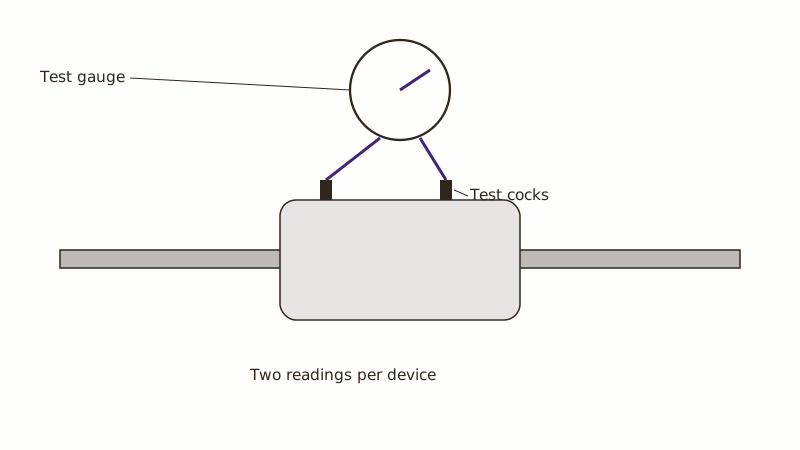
Irrigation or the line to the house stops for a short while. Keep the device reachable by trimming shrubs, opening gates and clearing standing water. Many sit outdoors in a box by the meter or house wall, and awkward access is a common reason for extra charges.
What does backflow testing cost?
A California backflow company reports testing from $50 up to $300 by device and local rules, with an average between $50 and $150 and some companies as low as $65. Repairs after a failed result cost extra, proposed before work begins. One company supplies these figures, so only your own quote settles it.
The page on what plumbing inspections cost puts those numbers next to permit and camera inspection costs. Fees shift with device count, access difficulty and any filing charge the provider adds. Two quotes help, with attention to what each includes, particularly retests and paperwork.
Who can do the work, and who must repair a failed device?
Tests are done by testers the water provider accepts, and repairs and replacements fall under plumbing law. California reserves permit work, and jobs reaching $1,000, for contractor license holders, which is why replacing a large device often goes to a plumbing contractor.
Ask for proof of the tester's qualification and for the license number on any repair quote. Swapping in a new device can require a city permit; Ontario's Building office is at (909) 395-2023 and Chino's Building Division is at 909-334-3251. Request a visit on the quote form; other services are listed at the home page.
Common questions
Will a test hold me up for long?
One residential device generally means a short visit, though poor access or a failed result adds time. Several devices or a commercial system take longer. Ask the tester for a time estimate when booking, and expect a brief water shutoff.
What should I bring up with the tester?
Whether the fee covers filing the paperwork with the water provider, whether the retest after a repair is built in, and the plan if the device fails. Confirm that the provider accepts the tester. Contractor license rules in California apply to permit work and bigger jobs.
Does someone need to let them in?
Yes, ideally, to open gates, show the device and take delivery of the report. When the device is outdoors and clear, some tests need just a short call before and after. Mention dogs, locked gates and the location of the water shutoff in advance.