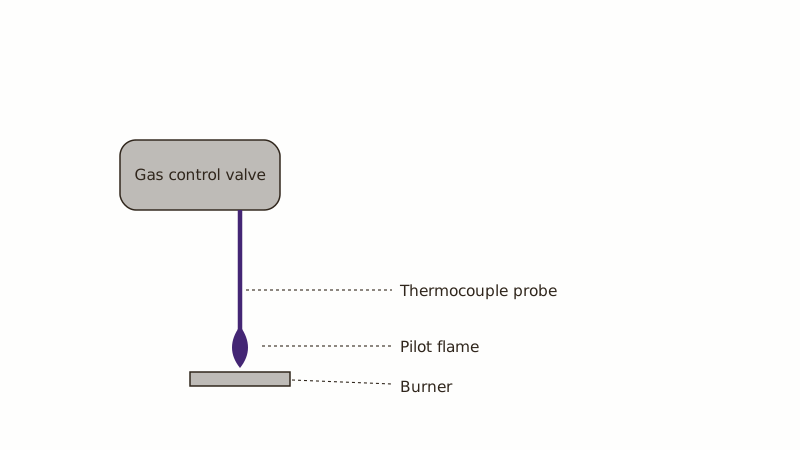
Down at the burner of a gas water heater, a slim metal probe stands in the pilot flame. Heat gives it a faint electrical output, and that signal is what keeps the gas valve from closing. When the probe wears, clogs with soot or drifts out of the flame, the valve shuts and the tank cools. One small part can mean no hot water for the house. This entry in the water heater repair series lists the checks worth making before you spend anything.
What does a thermocouple do in a gas water heater?
Think of it as a flame detector. Pilot heat gives the thermocouple a trickle of current that keeps the gas control valve open. No flame means a cooling probe, a closing valve, and no raw gas entering the room. Many newer heaters use a thermopile, a beefier cousin of the same idea.
That makes it a safety device, and a weak one produces a recognizable pattern: the pilot lights while the knob is held and dies when it is released. On a thermopile model, A.O. Smith's guidance (as summarized by a parts supplier) lists a pilot that does not heat the thermopile enough, a defective thermopile or a loose wire as causes.
What happens when a plumber replaces the part?
The plumber first proves the thermocouple is the culprit, closes the gas, matches a part to your model, fits it, checks where the flame touches it, and runs the heater through a heating cycle. Vent, combustion air and the gas control valve get a look as well, because a weak sensor can point at something else.
If the gas control valve or another safety switch has failed, a new thermocouple alone will not help. The supplier we read says high-limit trips and several status codes call for replacing the gas control, a bigger repair than the sensor. Have the plumber explain what was found and price repairing against replacing.
How can I tell that the thermocouple has failed?
The textbook sign is a pilot that burns only while your thumb holds the control knob down. Others: a cold heater with a visible pilot, a flame that looks small or yellow, or a pilot that keeps dying. Soot, rust or a probe knocked out of the flame can each be the cause.
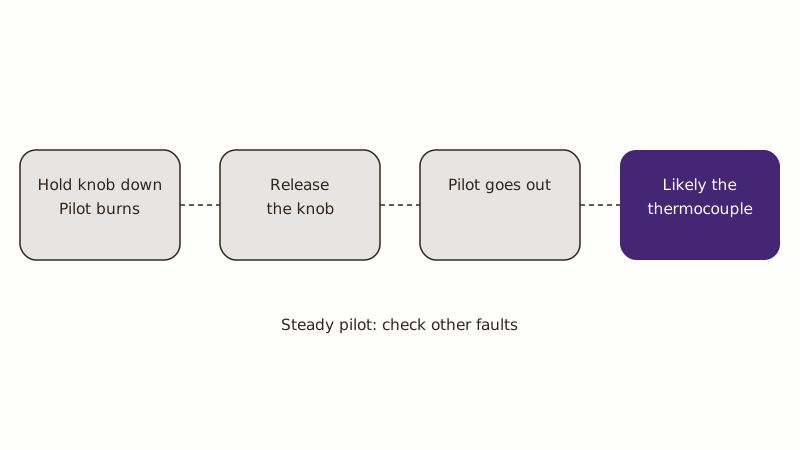
A cold shower does not always blame the thermocouple. Several other faults look the same from outside: a tripped high-limit switch, a thermostat turned low, a clogged vent, a dead gas control valve. Some newer heaters flash status codes, and patterns differ by maker, so read the tank label. If the pilot burns steadily yet the water is cold, use the other checklist in no hot water but the pilot light is on.
Is this a job for a homeowner?
Some owners tackle it on older standing-pilot heaters, but we recommend a plumber. The supplier we read says thermocouple or thermopile replacement should be left to a technician, because many newer units have sealed compartments and a wrong part or method can change how the heater burns gas. Gas appliances punish guesswork.
If you try anyway, remember that gas odor means an emergency: walk out, leave switches and phones alone inside, and ring SoCalGas from the yard at 1-800-427-2200, or 911 if the smell is strong. Relighting is reasonable with no odor present and the label's steps followed. Quit if two or three attempts fail. Our guide to relighting and repairing a pilot light goes through the steps.
When is it smarter to replace the whole water heater?
Go for a new unit when the tank leaks, repairs keep returning, or the heater is aged and the repair quote nears the price of a replacement. Tanks wear out, and hard water can leave sediment inside. Repairing a tired heater may buy little time.
Hardness in Ontario's 2025 water report averages 91 to 177 ppm depending on source, so your address may sit anywhere in that span. Upkeep means flushing the tank and inspecting the anode rod; see how often a water heater needs replacing and anode rod replacement. Weighing a new tank against tankless? Try tank versus tankless.
What do permits and the law say about this work?
A thermocouple swap is a repair, but a replacement water heater usually needs a permit because gas, venting and water connections are involved. Contractors on jobs of $1,000 or more, or anything permitted, must hold a California license. The City of Ontario Building office, (909) 395-2023, can confirm local steps.
Under California Health and Safety Code section 19211, water heaters have to be braced, anchored or strapped, so a replacement goes in strapped. SoCalGas is the gas utility for Ontario, and its page lists the cities it serves. To compare a repair and a replacement, ask for quotes; the price comes in writing first. Other services are listed on the home page.
Common questions
How long should the swap take?
With a standard heater and easy access the swap is quick, then comes a relight and a check of flame and vent. Extra faults, a tank to drain or a seized fitting stretch it. Ask for a time estimate with the quote.
Which items belong on the quote?
The part, the labor and a relight, plus a check of the gas control, vent and flame, a plan for any second fault, and how the visit is billed. Get it in writing, and verify the license number with the state.
Will gas be off at the house?
Possibly, for a short time. The plumber needs a clear path to the heater and may close the gas to the house. Clear the space, keep pets away and plan for a spell without hot water. Before the plumber goes, confirm the pilot is lit, hot water reaches a tap and nothing smells of gas.
Is a thermopile just a bigger thermocouple?
Close, but not interchangeable. A thermocouple makes a small current from the pilot flame, while a thermopile joins several junctions for more power, which some gas controls need. The plumber has to match the part to the heater model, so read the label on your tank.
Can an HVAC technician or only a plumber do the job?
Water heater service can come from a plumbing company or an HVAC company, depending on who is available. What matters is a contractor with a California license who works on your type of heater and will put the price in writing. Ask whether the company routinely services water heaters, not only furnaces.