Why does my pilot light keep going out?
This page sits under the water heater repair guide. Usually a trio of small things: the thermocouple has stopped sensing heat, dust or soot has furred up the pilot tube, or a draft is snuffing the flame. Now and then the gas valve or the supply itself is to blame. Each cause leaves a different clue, and the relight is the easy part.
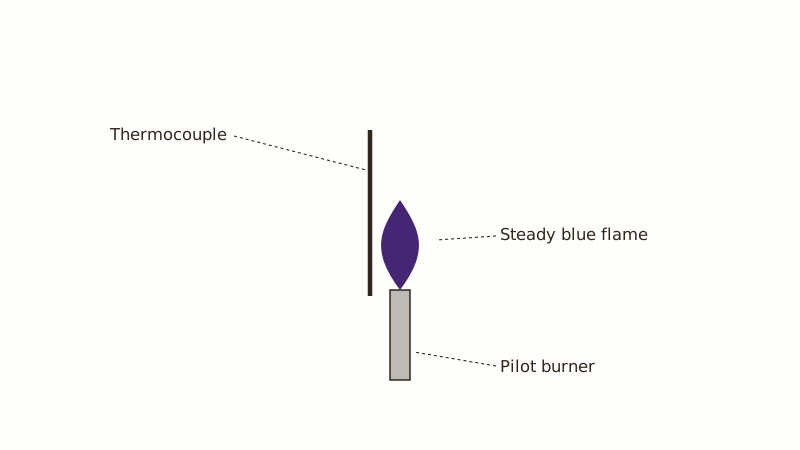
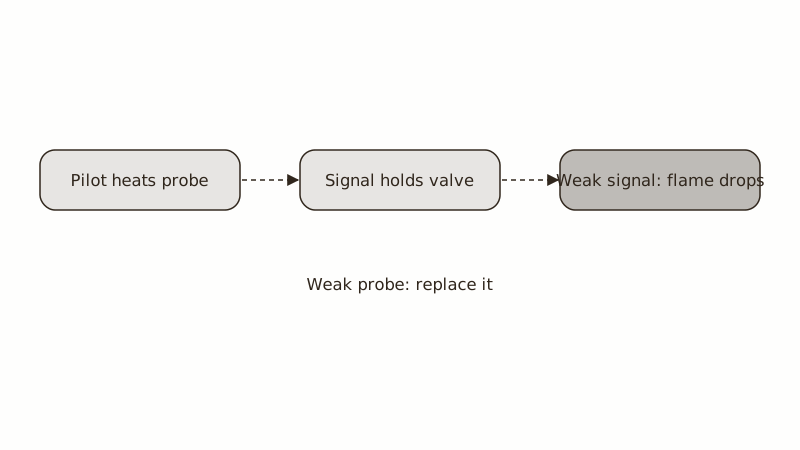
Picture a small, always-on flame sitting beside the main burner, with a metal probe in it. The probe makes a trickle of electricity from the heat, and that trickle is the signal that lets the gas valve stay open. Lose the flame or weaken the probe and the valve snaps shut. That shutoff is there for your protection, which is why repeated outages call for diagnosis, not a workaround.
Zooming out, the water heater repair guide puts this in context; here the focus is the flame.
What should the flame look like?
A healthy pilot is steady, mostly blue, and wraps the tip of the thermocouple. A yellow or orange flame, a flame that lifts away from the tip, or one that flickers hard points to trouble. Soot on the burner area, or a smell, means stop and have it checked before relighting.
Think of the flame as a gauge:
- Steady blue, covering the thermocouple tip: normal.
- Small or weak flame: a partly blocked pilot tube or low gas pressure.
- Yellow, floppy or smoky: poor combustion, possible venting trouble. A large, yellow, unsteady burner flame is also one of the warning signs SoCalGas lists for carbon monoxide.
- Flame that blows sideways or flutters: a draft, a failing vent, or a closet door that pulls air through.
Yellow flame, soot, or anyone in the house getting headaches or dizzy near the heater: turn the appliance off, open windows, go outdoors. Carbon monoxide has no odor, so the venting needs a professional look.
May I relight a pilot on my own?
Yes, provided the room smells normal and the instructions on the heater are legible. The label walks you through it: dial off, a pause, dial to pilot, hold the button while lighting, keep holding for the printed time. A gas odor at any step ends the attempt, and you leave.
SoCalGas points customers to the owner's manual, and warns that a cold or long exposure can dull the sense of smell. If you can smell gas, exit the house first. SoCalGas answers emergencies at 1-800-427-2200, to be dialed from outside, and anyone who may be hurt means 911 first. No light switches, no flames while waiting.
A meter shutoff changes the rules: it stays off until SoCalGas restores service, since only its crews turn it back on. And if the pilot refuses to catch after a couple of careful attempts, something has failed, so more tries add risk without adding results.
Many newer heaters have electronic ignition or a sealed burner, with no standing pilot to relight. If yours has a control with error codes or blinking lights, the manual lists what the pattern means.
Is a weak thermocouple the culprit?
Classic sign: flame holds while your finger presses the button and vanishes seconds after release. That suggests a probe that is sooty, bent away from the flame, or simply tired. A light cleaning occasionally helps; a weak one is better replaced, and the part is not costly.
In principle the swap is easy, because the probe threads into the gas control body, where a small wrench frees it. Still, work at that valve touches gas connections, and many manuals steer owners toward a professional. The thermocouple replacement guide covers what is involved. Pilot burning but water cold? That is its own puzzle, taken up in pilot lit, still no hot water.
What else blows a pilot out?
Drafts, lint, a blocked vent, weak gas pressure, a gritty pilot orifice, or a gas control on the way out can all do it. Also check the surroundings: a garage door slamming, a new exhaust fan, or a clothes dryer pulling air can disturb the flame. Heaters in closets need combustion air through louvers or vents.
For garage installs, SoCalGas says the water heater's flame source should be raised to 18 inches or higher (or as local code and the maker's instructions say), since flammable vapors settle low. If your heater sits on the garage floor with no platform, mention it to whoever services it, and ask the city building office how its rules apply.
Dust and lint build up over time, particularly in garages and utility closets. A gentle vacuum around the base can help, but do not poke into the burner area with tools. If the flame is lifting, rolling out, or flaring, that is a sign of airflow trouble that needs a professional.
How does hard water or sediment tie in?
Sediment does not usually blow out a pilot, but it makes the heater work harder, creates rumbling and cuts efficiency, and the tank may be at the age where parts fail together. If you are already calling about a pilot, ask whether the tank needs a flush or an inspection of the sacrificial rod.
Hardness in the City of Ontario's 2025 report averages 91 to 177 ppm, source by source, and scale accumulates in tanks as the years pass. The anode rod guide explains one of the maintenance items that affects tank life. Water pooling beneath the tank is another matter altogether; repairing a water heater leak explains, and replacement may be the answer.
When does a pilot problem need a plumber?
Bring someone in when two relights fail, when the probe needs replacing and the gas valve is not your comfort zone, when the flame is yellow or sooty, when the garage mounting height is in doubt, or when anything smells. Gas work is regulated, and permit jobs belong to contractors holding a California license.
Gas piping and appliance rules explain the boundary. Swapping the whole heater commonly needs a city permit; in Ontario that is the Building office, (909) 395-2023, while every neighboring city has its own counter. Earthquake strapping is a California requirement, so check that the quote includes it.
Someone local can be sent to inspect the pilot assembly, gas control and venting. Ask for a paper quote with parts and labor split out, and confirm the license number with the state contractor board. We answer weekdays 9am to 5pm. Begin at the quote page, or look around from the Chaffey Pipe and Drain home page.
Treat a phone figure as a guess. The quote written after the inspection is the real price.
Common questions
What are the steps to light the pilot again?
Start with the heater's own label. Typical sequence: knob to off; wait out the printed period so leftover gas disperses; knob to pilot; press the button as you light; hold it down for roughly a minute. A flame that keeps dying means stop trying. Gas in the air means do not start at all.
The flame dies the moment I release the button. Why?
Typically the probe is not registering heat, whether from wear, soot or a bent position, or the flame itself is too feeble. One more try after the label's waiting period is reasonable. A second failure points to a part that needs replacing.
Is a blue flame or a yellow flame normal?
Blue is normal. Yellow or orange, floppy or sooty flames suggest poor combustion, a blocked vent or a dirty burner. SoCalGas lists a large, yellow, unsteady burner flame as a possible carbon monoxide warning sign. Shut the appliance off and have it inspected rather than relighting it.
Can a pilot light problem cause cold showers?
Absolutely: without a pilot there is no burner ignition and therefore no heat at all, so showers run cold. With a burning pilot and a cold shower, think burner, gas control or element instead, which is a separate diagnosis. Describe exactly what you see when you call.
Should the whole heater go instead?
Often not. Pilot trouble generally means a low-cost part on a sturdy tank. A new heater earns its place when the tank is aged, leaking or visibly rusted. Collect one quote for the repair and one for a replacement, both on paper, and use water heater replacement cost to see what drives the second one.